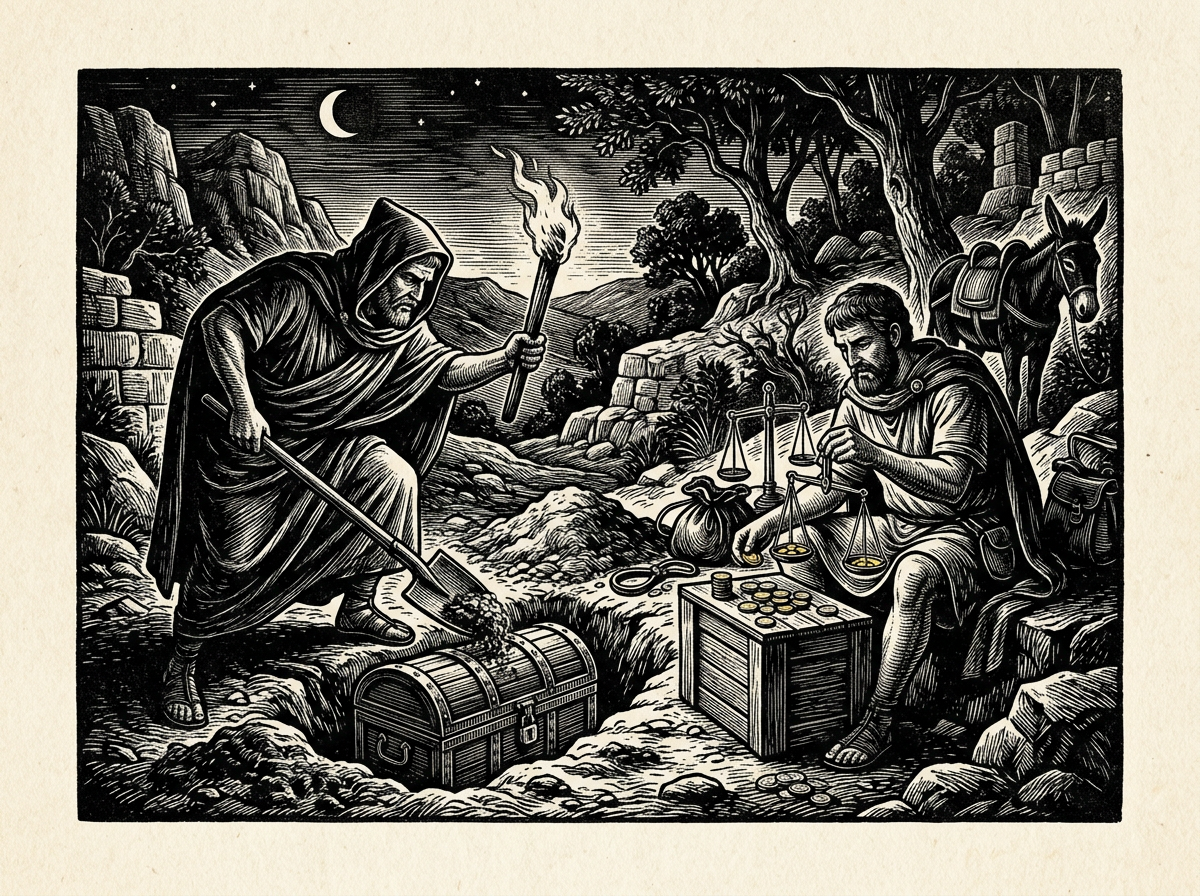
CHIEF DISTORTION: TRANSACTIONAL KINDNESS
16 Oct 2026
Unconditional virtue is a duty, not a transactional life hack
17th October: The Benefit Of Kindness | The Transactional Commodification of Duty into Mutual Social Profit
The Text in Question
The Daily Stoic Rendering
“A benefit should be kept like a buried treasure, only to be dug up in necessity. . . . Nature bids us to do well by all. . . . Wherever there is a human being, we have an opportunity for kindness.”
- Seneca, On the Happy Life, 24.2-3
Standard Academic Translation
“A benefit should be kept buried deep, like a treasure, not to be dug up unless necessity compels it... Nature commands me to do good to human beings, whether slaves or freemen, free-born or freedmen... Wherever a human being is, there is an opportunity for a good deed (beneficium).”
- Seneca, On the Happy Life, 24.2-3 (Basore adapted)
Academic Context & Breakdown
Seneca composed this treatise late in life while defending himself against fierce accusations of hypocrisy, as critics pointed out his vast wealth while preaching Stoic self-denial. He was not drafting a gentle guide for friendly daily networking or pleasant neighborly exchanges.
He was defending the Stoic view of duty (beneficium), arguing that a wise person bestows acts of moral virtue across all social classes, including despised slaves, without expecting praise or repayment. To Seneca, a true moral act is buried like hidden treasure, never brandished to demand gratitude or extract social leverage.
The Opening Counter-Punch
The commentary hijacks Seneca’s radical demand for uncalculated moral duty and degrades it into a self-serving strategy for personal optimization. It takes an uncompromising call to perform quiet, uncredited good deeds and twists it into a soft promise of mutual payoff and emotional reward. By swapping selfless cosmic obligation for bourgeois self-interest, the text sanitizes Seneca’s sharp philosophical edge to sell a comfortable win-win transaction.
The Breakdown
- The commentary alters Seneca’s rigorous concept of a moral good deed (beneficium) into a soft social transaction, claiming that kindness offers an opportunity "for both of you." Seneca commanded that a good deed be buried out of sight without looking for return, but the commentary inserts a subtle promise of personal benefit, transforming a noble duty into a reciprocal exchange.
- The text promises that if you treat others well, you will "be better off for it," presenting virtue as a reliable instrument for self-improvement. Seneca demanded that acts of virtue be done entirely for their own sake regardless of personal outcome, whereas the commentary reduces moral integrity to a functional life-hack for personal well-being.
- The commentary urges the reader to perform kindness while reassuring them that "we’re going to focus on what we control," wrapping the act in comfortable self-help phrasing. Seneca spoke of an imperative commanded by Nature toward all humanity, but the commentary narrows this grand duty into a risk-free exercise in personal control and social comfort.
What Is the Lesson?
The authentic lesson of Seneca’s text is that doing good is an absolute duty owed to fellow human beings, completely detached from personal gain or public recognition. You practice this by performing acts of genuine assistance without speaking of them, seeking no credit, and expecting zero emotional or practical return. Do good simply because rational nature requires it, then bury the memory of the act immediately.
How The Philosopher Would Respond
Seneca would flatly reject the idea that a good deed should be evaluated by whether you are "better off" for doing it, viewing such calculated self-interest as the mark of a petty trader rather than a philosopher.
"He who bestows a benefit seeking a return deserves to be deceived... A benefit is not a loan; it is an expenditure from which no return is to be demanded. The reward of a good deed is to have done it."
- Seneca, On Benefits, 1.1.9–12
Chaff & Wheat Analysis
The Chaff: The article challenges the self-help promise that kindness reliably makes you better off, turning moral duty into a strategy for personal gain. Kindness can benefit both people, but that possibility is neither a guarantee nor a condition for doing good.
The Wheat: Offer help because another person matters, not because they will repay, praise, or improve you. You control your intentions and actions—not their gratitude—and receiving an incidental benefit does not make your kindness transactional.
Related dispatches
FALSE COMFORT: SANITIZED MORTALITY · A Critique of Modern Stoicism
Modern Stoicism sanitizes ancient dread into comfortable lifestyle poetry
24 Nov 2026
FATAL COMPROMISE: COMMODIFIED RESILIENCE · A Critique of Modern Stoicism
Epictetus did not teach resilience to protect your quiet morning routine
24 Nov 2026
MODERN STOICISM: TRIVIALIZED CATASTROPHE · A Critique of Modern Stoicism
Ancient Stoicism was forged for catastrophe, not broken kitchenware
22 Nov 2026
MODERN RESTRAINT: CURBED ENTITLEMENT · The Bend Index
Moderation is not puritanism: finding humility in an age of impulse
25 Nov 2026