FALSE COMFORT: SANITIZED MORTALITY
24 Nov 2026
Modern Stoicism sanitizes ancient dread into comfortable lifestyle poetry
24th November: Train To Let Go Of What’s Not Yours | Sanitizing Existential Dread into Poetic Whispers
THE DUAL-TRANSLATION HEADER
The Text in Question
The Daily Stoic Rendering
“Whenever you experience the pangs of losing something, don’t treat it like a part of yourself but as a breakable glass, so when it falls you will remember that and won’t be troubled. So too, whenever you kiss your child, sibling, or friend, don’t layer on top of the experience all the things you might wish, but hold them back and stop them, just as those who ride behind triumphant generals remind them they are mortal. In the same way, remind yourself that your precious one isn’t one of your possessions, but something given for now, not forever . . .” - Epictetus, Discourses, 3.24.84-86a
Standard Academic Translation
“If you kiss your child, or your brother, or your friend, never allow your imagination to range free, and do not let your transport go as far as it would like; but pull it back, check it, like those who stand behind generals when they ride in triumph, and remind them that they are mortal. Remind yourself in like manner that he whom you love is mortal, and that nothing you love is your own: it has been given to you for the present, not that it should not be taken from you, nor has it been given to you forever, but like a fig or a cluster of grapes, at an appointed season of the year, so that if you yearn for it in winter, you are a fool.” - Discourses 3.24.85-87 (trans. Robin Hard)
ACADEMIC CONTEXT & BREAKDOWN
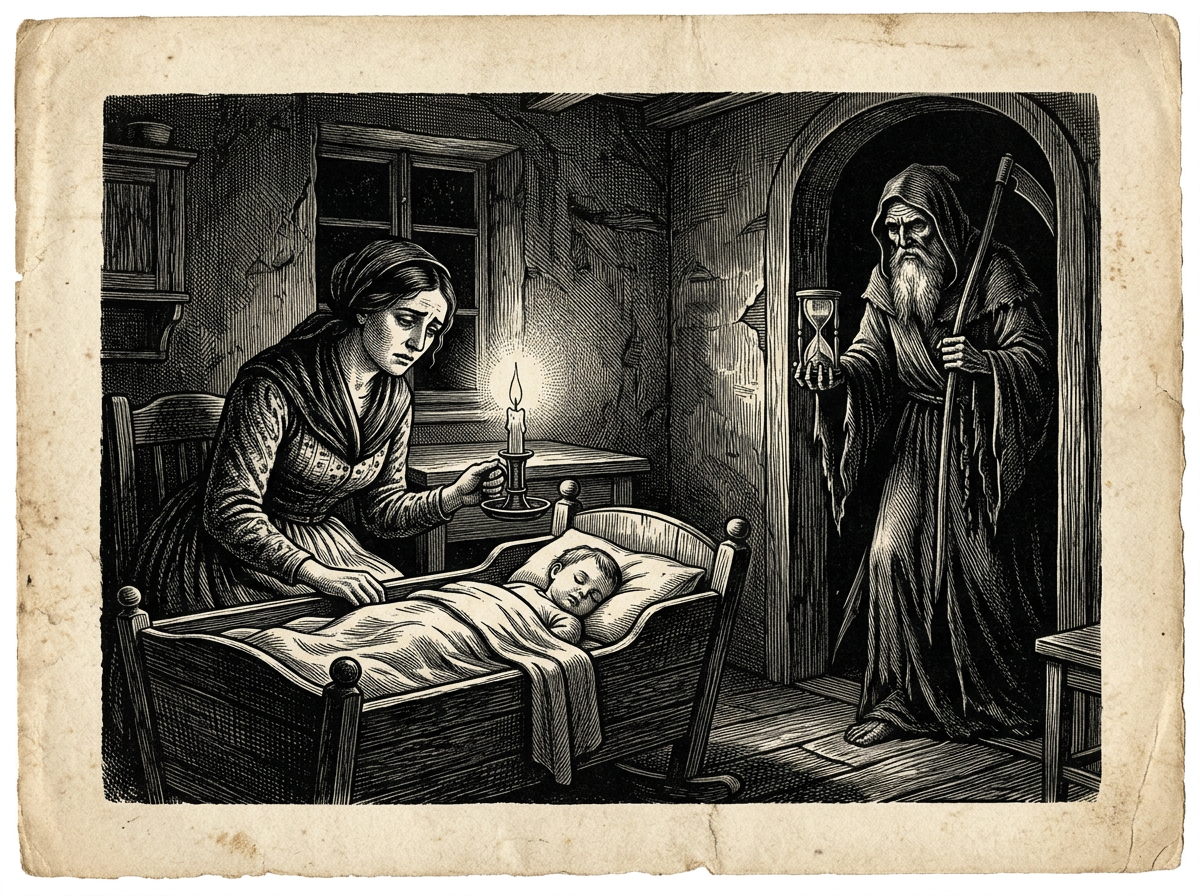
Epictetus barked these brutal sentences in a drafty, whitewashed schoolhouse in Nicopolis, dragging his twisted, broken leg across the stone floor as he leaned on a worn wooden crutch. He was looking into the faces of young Roman fathers and brothers who lived under the shadow of sudden death where child mortality exceeded thirty percent, fevers wiped out households overnight, and imperial purges regularly tore families apart.
In Hard’s academic translation, Epictetus is not teaching a gentle, poetic perspective to soften emotional blows, but prescribing an emergency cognitive amputation of longing. When you kiss your child on the forehead at night, you must actively arrest the heart’s instinctual leap into tomorrow and confront their imminent, potential corpse before morning arrives. To crave a living child out of season is as insane and unnatural as demanding ripe figs in the dead of winter; they are temporary fruits of the cosmos, strictly on loan, and never your property.
THE OPENING COUNTER-PUNCH
The commentary guts an agonizing, terrifying spiritual discipline and degrades it into romantic cinema. It hijacks a slave’s ruthless command to look directly into the cold grave of a sleeping child and twists it into a moody theatrical metaphor about Roman parades. A brutal scalpel designed to butcher emotional clinging is sanitized into poetic self-talk for the sentimental ego.
THE BREAKDOWN
- The Cinematic Deflection — The commentary avoids Epictetus's harrowing injunction to mentally bury your own child, deflecting instead to Hollywood imagery where “Only a few would notice the aide in the back, right behind the commander, whispering into his ear, ‘Remember, thou art mortal.’” Epictetus brought up the triumphs solely as a momentary analogy to show how aggressively you must strike down your own maternal and paternal love. Sheltering the reader behind the glamorous triumph of an imperial general completely changes a visceral confrontation with domestic death into a thrilling, detached aesthetic scene.
- The Poetic Softening of Terror — The modern writer evades Epictetus's violent command to arrest the imagination, cooing that “in our own lives, we can train to be that whisper.” Hard’s translation shows Epictetus commanding a violent, internal crackdown: “never allow your imagination to range free, and do not let your transport go as far as it would like; but pull it back, check it.” Rebranding an emergency mental blockade into a gentle, romanticized "whisper" corrupts Epictetus's rigorous psychological surgery into soothing lifestyle advice that is entirely unauthentic to the Greek text.
- The Erasure of the Cosmic Scythe — The commentary cuts off Epictetus’s closing blow and wraps up with the pedestrian advice that “They just mean the loss will be all the more jarring when it occurs.” Hard’s translation does not warn against things being "jarring"; it drives the dagger home: to crave what is gone is to be a raving “fool” who demands fruit out of season. By cutting the seasonal fig metaphor and substituting modern emotional buffering, the commentary shields readers from the terrifying truth that reality views their deepest attachments with utter indifference.
What is the lesson we can learn from "Standard Academic Translation"? And how can we apply or practice it?
The lesson from the standard translation is that every human being you love is a temporary loan with an unannounced expiration date. Love that forgets mortality is an act of madness; the moment you assume someone belongs to your future, you become an arrogant fool fighting the seasons of nature.
To practice this, kiss your child, partner, or friend today and deliberately confront the reality of their mortality in that exact fraction of a second. Silence the instinctive assumption that they will be here tomorrow, and refuse the egoic lie that their presence is your permanent right. Treat them as seasonal fruit given into your hands for an allotted hour, so that when the season ends and nature claims its loan, you surrender them without howling at the sky.
HOW THE PHILOSOPHER WOULD RESPOND
Epictetus would fiercely mock anyone using his words to strike an artistic pose or whisper dramatic poetry to themselves, reminding the reader that philosophy exists to prepare a parent to bury a child without cursing the gods.
“If you are kissing your child or your wife, say to yourself that it is human beings that you are kissing; then, when they die, you will not be distraught. What harm is it, after all, while you are kissing your child, to whisper, ‘Tomorrow you may die’?” - Epictetus, Enchiridion, 3; Discourses, 3.24.88
Chaff & Wheat Analysis
The Chaff: Modern commentary perpetuates the myth that ancient Stoicism is an aesthetic toolkit for emotional buffering and gentle self-soothing. This misrepresentation replaces an agonizing spiritual discipline with theatrical metaphors, protecting the modern reader from the terrifying core of Epictetus's philosophy.
The Wheat: The authentic Stoic discipline demands an immediate, radical cognitive arrest of our instinct to claim ownership over other people. True resilience is forged by confronting the finality of mortality in ordinary moments, accepting that those we cherish are borrowed gifts rather than guaranteed fixtures of our future.
Related dispatches
FATAL COMPROMISE: COMMODIFIED RESILIENCE · A Critique of Modern Stoicism
Epictetus did not teach resilience to protect your quiet morning routine
24 Nov 2026
MODERN STOICISM: TRIVIALIZED CATASTROPHE · A Critique of Modern Stoicism
Ancient Stoicism was forged for catastrophe, not broken kitchenware
22 Nov 2026
CORE FALLACY: NOSTALGIC VIRTUE · A Critique of Modern Stoicism
True virtue is an immediate choice, not a nostalgic peak experience
22 Nov 2026
MODERN RESTRAINT: CURBED ENTITLEMENT · The Bend Index
Moderation is not puritanism: finding humility in an age of impulse
25 Nov 2026