FATAL COMPROMISE: COMMODIFIED RESILIENCE
24 Nov 2026
Epictetus did not teach resilience to protect your quiet morning routine
23rd November: Attachments Are The Enemy | Corrupting Moral Sovereignty into an Agility Playbook
THE DUAL-TRANSLATION HEADER
The Text in Question
The Daily Stoic Rendering
“In short, you must remember this, that if you hold anything dear outside of your own reasoned choice, you will have destroyed your capacity for choice.” - Epictetus, Discourses, 4.4.23
Standard Academic Translation
“In short, remember this: that if you value anything whatever that lies outside the sphere of choice, you have destroyed your choice. And not only office, but even a lack of office; not only business, but even leisure.” - Discourses 4.4.23 (trans. Robin Hard)
ACADEMIC CONTEXT & BREAKDOWN
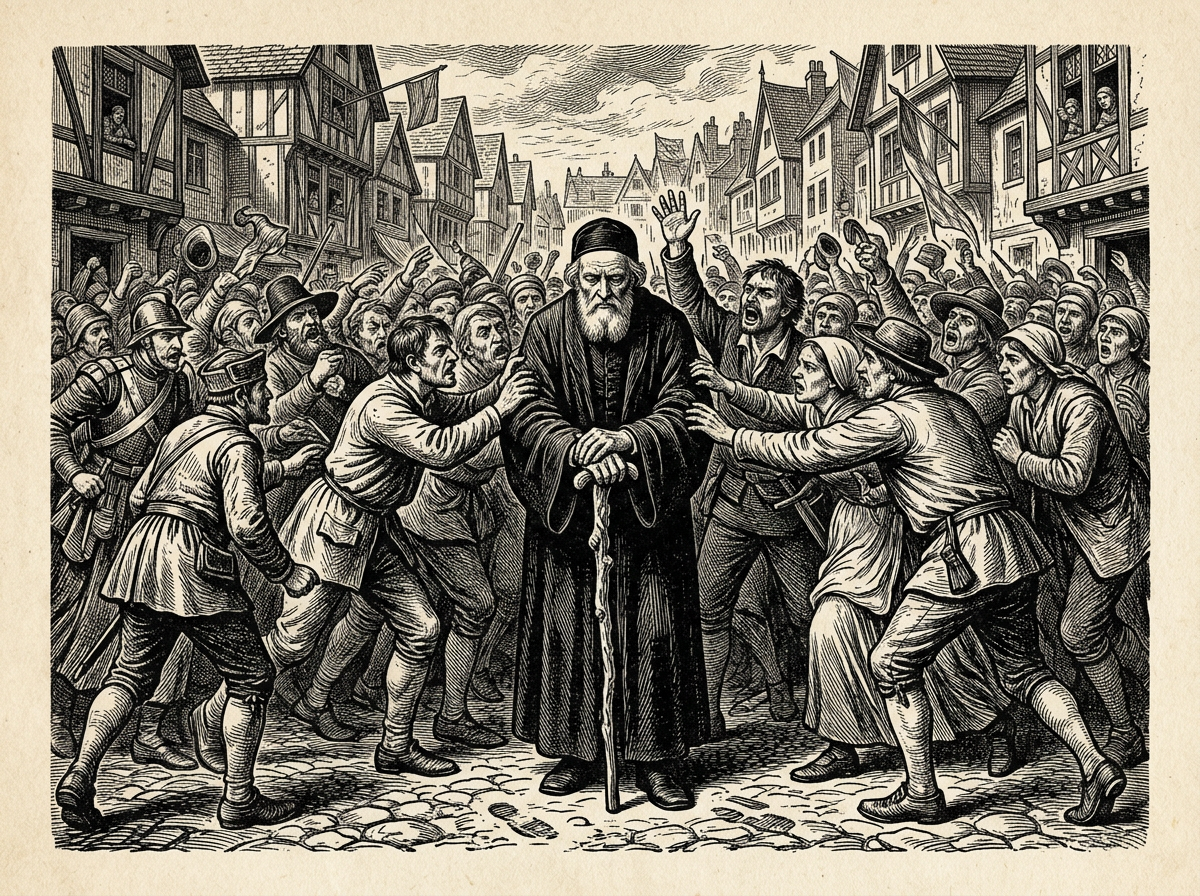
Epictetus barked these words in a crowded, drafty hall in Nicopolis, leaning hard on his wooden walking stick to relieve his shattered, twisted leg. He was an exiled former slave lecturing well-heeled Roman youths who believed they were free simply because they were wealthy, patrician, and held prestigious imperial appointments. Many of these young men claimed they were leaving politics to seek a life of quiet reading and philosophical retirement, thinking that avoiding public office made them virtuous.
In Hard’s academic translation, Epictetus delivers a devastating blow: valuing anything external even the quiet life of study, peace, or freedom from civic burden instantly destroys moral volition (prohairesis). If you demand solitude, quiet, or safety, you become the trembling slave of whatever noisy neighbor, emperor, or crisis interrupts it. Moral autonomy is not about escaping to a peaceful lifestyle, but preserving uncompromised integrity whether standing before an executioner or navigating the chaos of the Roman forum.
THE OPENING COUNTER-PUNCH
The commentary guts an uncompromising demand for total moral purity and degrades it into corporate change-management coaching. It hijacks Epictetus's terrifying warning about the destruction of the soul's moral agency and twists it into a tactical guide for staying agile during economic disruption. Radical spiritual invulnerability is shamelessly sanitized into executive flexibility.
THE BREAKDOWN
- The Neoliberal Downsizing into Agility — The commentary dilutes Epictetus's radical claim down to a corporate resilience hack, celebrating that “our choice is resilient and adaptable.” Hard's translation exposes Epictetus's actual verdict: valuing externals does not merely make you less agile, “you have destroyed your choice” altogether killing the moral faculty dead. Rebranding an existential, moral catastrophe as a matter of being nimble and "adaptable" fundamentally changes Epictetus’s warning into cheap productivity jargon, which is completely unauthentic to the Greek text.
- The Erasure of Intellectual Vanity — The modern writer evades the second half of Epictetus's text entirely, choosing to list generic worldly targets while ignoring that Epictetus condemned not only office, “but even leisure.” The commentary conveniently warns against clinging to a “lifestyle,” but conceals Epictetus's true target: scholars, meditators, and readers who become bitterly attached to their own peace, quiet books, and uninterrupted routines. By omitting this crucial insight, the commentary shields comfortable readers from confronting their own delicate, intellectual entitlement.
- The Utilitarian Inversion of the Soul — The commentary caps off the reading with the bourgeois promise that letting go will make things “easier and happier” so that “the easier it will be to accept and adapt to what does happen.” Epictetus never promised an "easier" life; he demanded that you prefer exile, torture, and death over the slightest compromise of your rational faculty. Swapping an iron vow of moral defiance for the consumerist promise of an easier daily commute corrupts ancient virtue into middle-class convenience.
What is the lesson we can learn from "Standard Academic Translation"? And how can we apply or practice it?
The lesson from the standard translation is that enslavement does not just come from craving wealth, promotions, and fame; it comes equally from craving quiet, uninterrupted time, and an absence of stress. The second you insist that your environment must be peaceful, orderly, or comfortable for you to function, you hand over your freedom to any circumstance that shatters that peace.
To practice this, take your most cherished condition for personal comfort a quiet morning routine, an uninterrupted work block, or a peaceful evening at home and observe your reaction the moment it is violently disrupted. When an urgent emergency, a loud neighbor, or an intrusive demand shatters your plan, refuse the urge to curse the distraction. Eradicate your precious attachment to leisure instantly, and recognize that preserving patience and justice in the midst of total disruption is your only true task.
HOW THE PHILOSOPHER WOULD RESPOND
Epictetus would fiercely mock anyone using his words to feel flexible and relaxed, reminding the reader that a soul that whines about lost peace and quiet is just as wretched as a tyrant crying over a lost crown.
“Do you not know that sickness and death must overtake us, no matter what we are doing? They overtake the farmer at his plow, the sailor on the sea. What would you like to be doing when they overtake you? For my part, I would like to be overtaken doing nothing other than attending to my own moral will, that it may be undisturbed, unimpeded, unconstrained, and free.” - Epictetus, Discourses, 4.10.12-13
Chaff & Wheat Analysis
The Chaff: The comfortable myth assumes that detachment from externals is a productivity technique designed to preserve mental agility and maintain a friction-free lifestyle. This framing trivializes an existential demand for absolute moral agency into executive stress-management.
The Wheat: True moral autonomy recognizes that demanding quiet, orderly conditions makes one an anxious hostage to inevitable disruptions. Sovereign agency is maintained not by retreating to uninterrupted peace, but by refusing to surrender patience and integrity when that peace is violently broken.
Related dispatches
FALSE COMFORT: SANITIZED MORTALITY · A Critique of Modern Stoicism
Modern Stoicism sanitizes ancient dread into comfortable lifestyle poetry
24 Nov 2026
MODERN STOICISM: TRIVIALIZED CATASTROPHE · A Critique of Modern Stoicism
Ancient Stoicism was forged for catastrophe, not broken kitchenware
22 Nov 2026
CORE FALLACY: NOSTALGIC VIRTUE · A Critique of Modern Stoicism
True virtue is an immediate choice, not a nostalgic peak experience
22 Nov 2026
MODERN RESTRAINT: CURBED ENTITLEMENT · The Bend Index
Moderation is not puritanism: finding humility in an age of impulse
25 Nov 2026