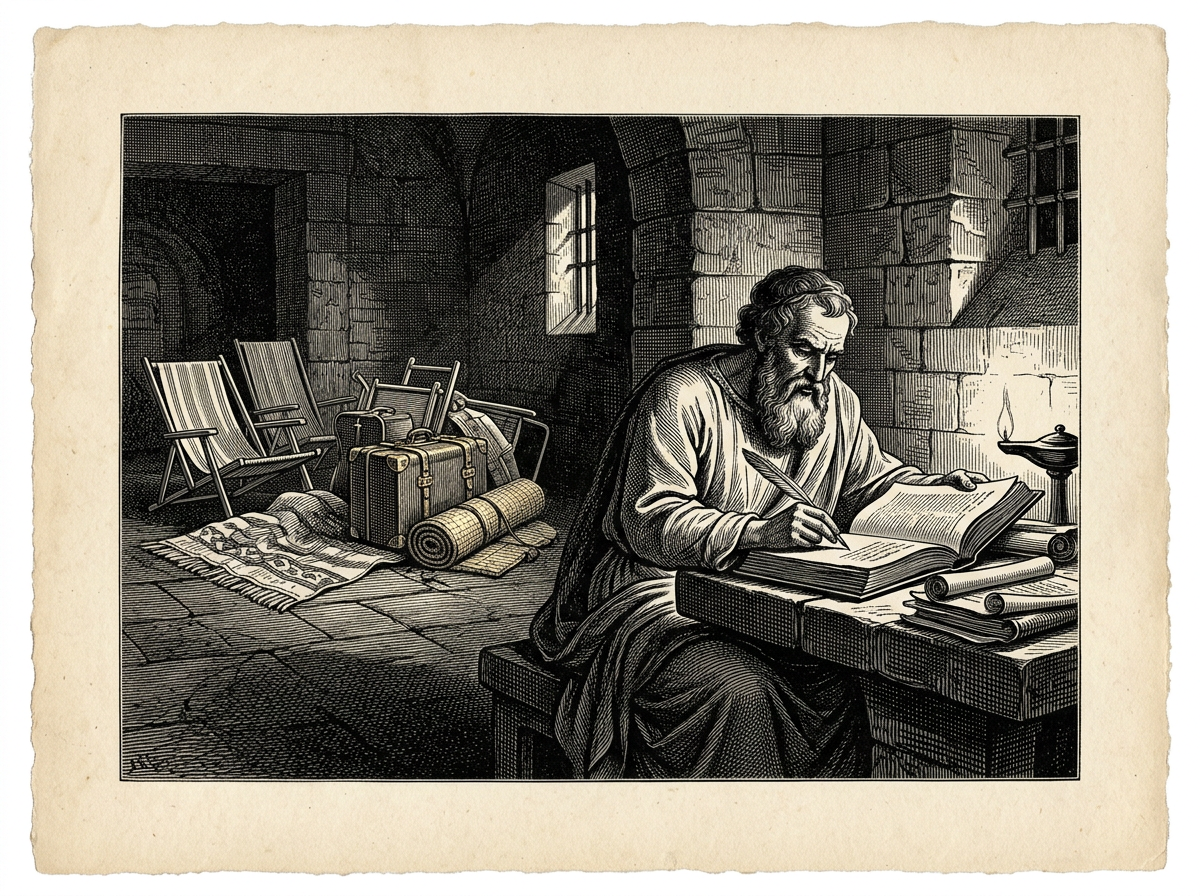
LIFESTYLE TRAP: BOURGEOIS LEISURE
28 Sept 2026
How modern self-help turned Seneca's warnings into resort etiquette.
26th September: What Time Off Is For | The Commercialization of Spiritual Contemplation into Bourgeois Vacation Etiquette
The Text in Question
The Daily Stoic Rendering:
“Leisure without study is death a tomb for the living person.” - Seneca, Moral Letters, 82.4
Standard Academic Translation:
"Leisure without letters is death; it is a tomb for the living man." - Seneca, Moral Letters, 82.4 (trans. Richard M. Gummere)
Academic Context & Breakdown
Seneca wrote Letter 82 in his final years, living in quiet retirement away from the deadly politics of Rome. Having survived decades of court intrigue, exile, and Nero's tyrannical paranoia, he retired not to relax, but to prepare his soul for death. He was not addressing overworked modern professionals planning an island getaway; he was addressing the urgent preservation of the human mind against spiritual decay.
In Gummere's translation, "leisure without letters" (otium sine litteris) refers to a life surrendered to passive idleness, sensory gratification, and mental oblivion. For Seneca, true otium (philosophical retreat) was a serious, demanding duty an unyielding engagement with philosophy (litteris) to fortify reason before mortal life expires. To abandon the active study of truth during period of rest is to suffer a living death, reducing a rational human being to a corpse buried in its own comfort.
The commentary neuters this existential warning against spiritual death and rewires it into a condescending vacation guide for affluent professionals. It takes Seneca's severe demand for lifelong philosophical rigor and degrades it into a bourgeois recommendation for resort reading. By replacing deep spiritual labor with curated leisure aesthetics, the commentary turns Stoic wisdom into lifestyle advice.
The Opening Counter-Punch
The commentary guts Seneca’s severe warning against spiritual suicide and replaces it with a patronizing lecture on how to spend your PTO. It takes a philosopher’s urgent plea for eternal truth and degrades it into a resort etiquette guide telling you to put a smart book in your beach bag.
The Breakdown
- The commentary replaces Seneca's urgent call for spiritual survival with entitlement culture, comforting the reader by declaring that "you deserve a vacation." Seneca never validated the modern urge to reward oneself with sensory escape or corporate self-pampering. By framing leisure as a well-earned luxury reward, the commentary changes a solemn philosophical discipline into a consumerist entitlement.
- The commentary degrades the sacred pursuit of wisdom into a chic aesthetic habit, instructing the reader to "tuck a book under your arm (and not a trashy beach read)." In Gummere’s translation, Seneca is not discussing reading choices for poolside entertainment or personal refinement. The commentary transforms a desperate, lifelong fight against mental decay into a performative, upper-middle-class vacation style.
- The commentary softens Seneca’s terrifying verdict of moral death into a mild critique of passive retirement habits, warning against the urge "to watch endless amounts of television or simply travel from place to place." Seneca stated plainly that unexamined leisure is a living burial ("a tomb for the living man"), not merely a bad habit or wasted free time. The commentary sanitizes Seneca's existential horror into a mild lecture on personal productivity.
The Lesson of the Text
The academic translation teaches that unstructured time is dangerous to the soul if it is divorced from continuous rational self-examination. We apply this by treating our periods of rest not as an opportunity to turn off our minds, but as a dedicated space to deepen our moral character and study fundamental truths.
How the Philosopher Would Respond
Seneca would flatly reject this attempt to turn spiritual retreat into a guide for curated vacation habits. He did not write to help you choose the right books for your beach bag, but to warn you that an unexamined life of ease is nothing more than early burial.
"Withdraw into yourself, as far as you can; associate with those who will make a better man of you; receive those whom you can make better. Such processes are mutual, for men learn while they teach." - Seneca, Moral Letters, 7.8
Chaff & Wheat Analysis
The Chaff: The article challenges the idea that packing a serious book and avoiding supposedly frivolous entertainment makes a vacation philosophically meaningful. But its counterclaim risks another oversimplification: that ordinary rest is spiritual decay unless filled with demanding study.
The Wheat: The durable insight is that reflection matters more than the appearance of intellectual leisure: reading serves a philosophical purpose when it helps examine judgments and guide conduct. When you have the capacity, make room for that practice without treating needed recovery or simple enjoyment as moral failures.
Related dispatches
FALSE COMFORT: SANITIZED MORTALITY · A Critique of Modern Stoicism
Modern Stoicism sanitizes ancient dread into comfortable lifestyle poetry
24 Nov 2026
FATAL COMPROMISE: COMMODIFIED RESILIENCE · A Critique of Modern Stoicism
Epictetus did not teach resilience to protect your quiet morning routine
24 Nov 2026
MODERN STOICISM: TRIVIALIZED CATASTROPHE · A Critique of Modern Stoicism
Ancient Stoicism was forged for catastrophe, not broken kitchenware
22 Nov 2026
MODERN RESTRAINT: CURBED ENTITLEMENT · The Bend Index
Moderation is not puritanism: finding humility in an age of impulse
25 Nov 2026