EGO DISTORTION: COMBAT FANTASY
20 Sept 2026
Stoicism is a fortress for endurance, not a cage match
20th September: Life Isn’t a Dance | The Fetishization of Combat Dynamics to Sell Egoic Toughness
The Text in Question
The Daily Stoic Rendering:
“The art of living is more like wrestling than dancing, because an artful life requires being prepared to meet and withstand sudden and unexpected attacks.” - Marcus Aurelius, Meditations, 7.61
Standard Academic Translation:
"The art of life is more like the wrestler's art than the dancer's, in respect of this, that it should stand ready and firm to meet onset from whence it may, even though unforeseen." - Marcus Aurelius, Meditations, 7.61 (trans. A.S.L. Farquharson)
Academic Context & Breakdown
Marcus Aurelius recorded Book 7 in a cold, bleak military camp near the Danube, facing a devastating plague, financial bankruptcy of the empire, and relentless invasions by Northern tribes. He was an aging, frail man suffering from chronic physical pain, burdened with the absolute responsibility of defending Roman civilization. He was not writing a locker-room speech to hype up hyper-competitive athletes or modern careerists. He was engaged in an immediate, internal battle to keep his reason grounded amidst relentless tragedy.
In Farquharson's translation, Marcus contrasts the dancer with the wrestler to emphasize stability (firmness) over mere performative fluidity. A dancer relies on predictable rhythms and controlled environments, whereas a wrestler must maintain a firm stance against sudden, violent forces. Marcus is asserting that life hurls unpredictable hardships at us illness, loss, betrayal and our sole duty is to stand firm (stand ready and firm) without losing our moral equilibrium or rational judgment.
The commentary hijacks this call for internal stability and rewires it into a aggressive, battle-ground fantasy of worldly conquest. It transforms Marcus’s quiet demand for defensive moral grounding into an ego-driven hustle manifesto about defeating rivals. By recasting Stoic endurance as a fight to win, the commentary turns a spiritual fortress into a combat-sport branding exercise.
The Opening Counter-Punch
The commentary guts Marcus Aurelius’s quiet, defensive plea for spiritual stability and replaces it with a visceral combat-sport fantasy. It takes an Emperor's private instruction to stand firm against fate and degrades it into a hyper-aggressive lesson on out-tackling your adversaries.
The Breakdown
- The commentary projects aggressive external combat onto a defense of inner stability, claiming that a wrestler's "sport is a battle, just like life." Marcus Aurelius was not framing life as an external war against other human beings; he was addressing the soul's defense against unpredictable fortune. By romanticizing life as an active combat arena, the commentary shifts the horizon from peaceful inner fortitude to aggressive confrontation.
- The commentary invents an external enemy where Stoicism demands universal brotherhood, claiming that a wrestler is "fighting an opponent as well as their own limitations." In Farquharson's translation, the "onset" (attack) comes from external events, not human adversaries to be conquered or choked out. The commentary distorts Stoic cosmopolitanism into a paranoid worldview where other people are rivals meant to be overcome.
- The commentary replaces quiet moral resilience with egoic triumph, urging readers to "cultivate an indomitable will to prevail." Marcus Aurelius never used the wrestling metaphor to urge personal dominance or victory over others. The commentary transforms a practice aimed at surrendering outcome to the cosmic order into a self-help promise of becoming an unstoppable victor.
The Lesson of the Text
The academic translation teaches that life requires an unshakeable foundation capable of absorbing sudden blows without being knocked off balance. We apply this by establishing deep, internal stability before crises arrive, ensuring that when unexpected tragedy strikes, our moral stance remains rooted and unbroken.
How the Philosopher Would Respond
Marcus Aurelius would flatly reject this attempt to turn internal stance-building into a combat-sport victory speech. He did not write to help you defeat opponents or dominate an arena, but to keep your soul firm and unbent when destiny strikes without warning.
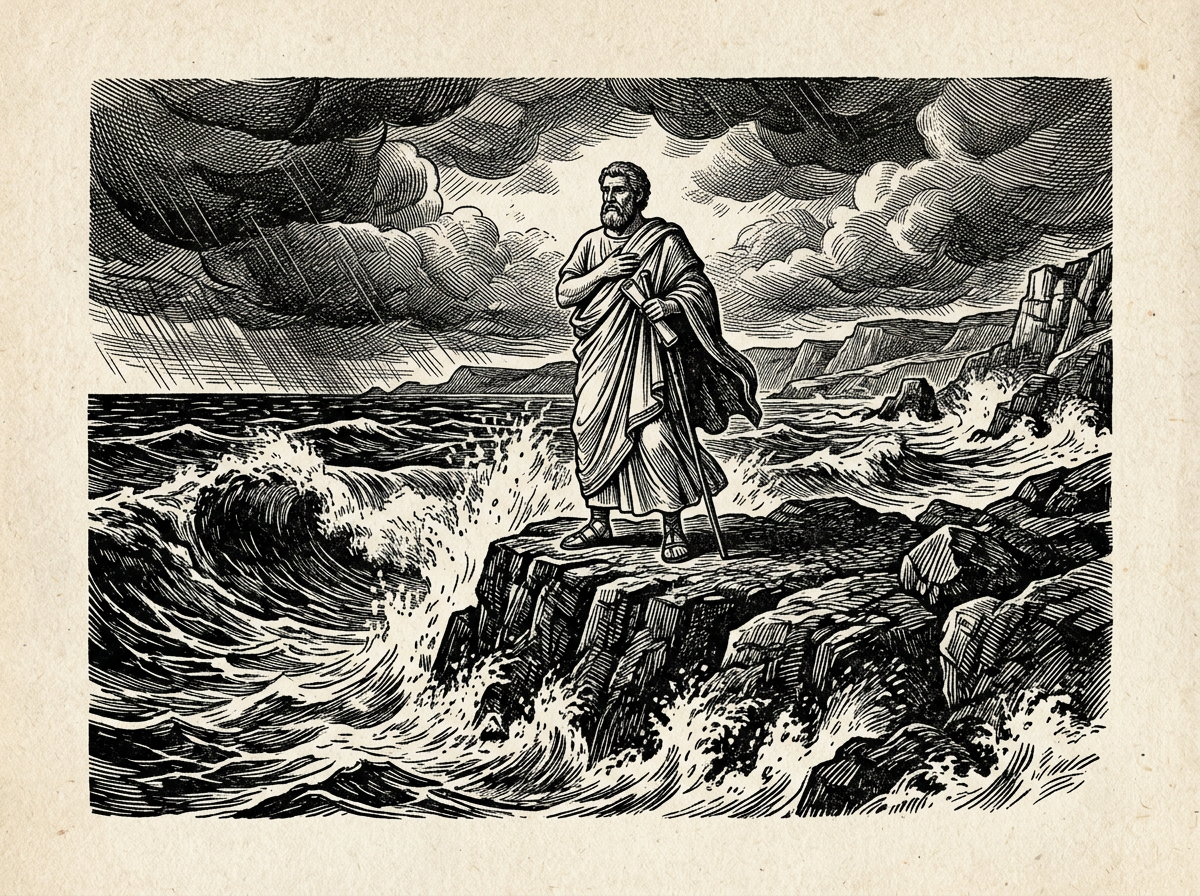
"Be like the promontory against which the waves continually break, but it stands firm and tames the fury of the water around it." - Marcus Aurelius, Meditations, 4.49
Chaff & Wheat Analysis
The Chaff: The article challenges the self-help myth that Stoic resilience means treating life as combat, other people as opponents, and success as proof of an indomitable will. Readiness for hardship can be valuable without making dominance the goal.
The Wheat: The durable lesson is to prepare for uncertainty by practicing sound judgment and principled action rather than expecting to control outcomes. Standing firm need not mean feeling nothing or never faltering; it means returning to your values when circumstances unsettle you.
Related dispatches
FALSE COMFORT: SANITIZED MORTALITY · A Critique of Modern Stoicism
Modern Stoicism sanitizes ancient dread into comfortable lifestyle poetry
24 Nov 2026
FATAL COMPROMISE: COMMODIFIED RESILIENCE · A Critique of Modern Stoicism
Epictetus did not teach resilience to protect your quiet morning routine
24 Nov 2026
MODERN STOICISM: TRIVIALIZED CATASTROPHE · A Critique of Modern Stoicism
Ancient Stoicism was forged for catastrophe, not broken kitchenware
22 Nov 2026
MODERN RESTRAINT: CURBED ENTITLEMENT · The Bend Index
Moderation is not puritanism: finding humility in an age of impulse
25 Nov 2026