METHOD: HOW WE WINNOW
11 Jan 2026
A note on the threshing floor
Every dispatch in this paper follows one procedure, and it is worth stating plainly so readers can check our work.
The commentary:
First, steelman. We restate the claim in the strongest form its most careful proponent would accept. If we cannot produce a version a believer would sign, we do not publish. Most criticism of self-help fails at this step: it attacks the airport-paperback version and declares victory over a genre that has better representatives.
Chaff & Wheat Analyse:
Second, find the conditions. Nearly every durable piece of advice is true somewhere. The task is to specify where: for whom, at what stage, under what constraints, with what resources already in place. Advice without conditions is not wisdom, it is weather.
Third, measure the distance. The Bend Index is our shorthand for how far the specified conditions sit from the circumstances of the person likely to be reading. High-bend advice is not false. It is misaddressed, which in practice does more damage, because falsity invites argument and misaddressing invites self-blame.
Fourth, keep the grain. We do not run a dispatch that ends only in demolition. Each piece must name what survives — the part worth carrying forward — because a reader who leaves with nothing will simply pick up the next manual, and it will be worse.
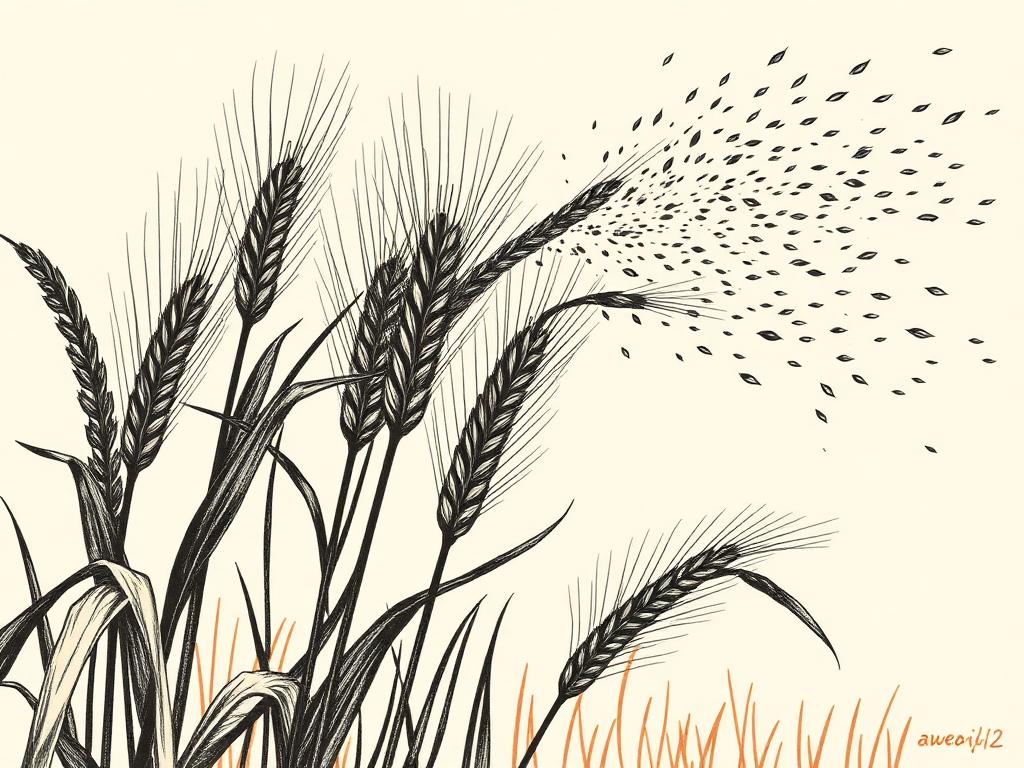
The name of this paper is not a joke about superiority. Winnowing is agricultural labour, repetitive and unglamorous, and the chaff was never the enemy — it was simply attached to the thing you needed, and someone had to do the separating.
Chaff & Wheat Analysis
The Chaff: The oversimplification is that self-help advice must be either universally useful or worthless. That framing overlooks both its strongest case and the conditions that make it usable, encouraging readers to blame themselves when advice is simply misaddressed.
The Wheat: Evaluate advice in its strongest form, then ask whether its assumptions about resources, constraints, and life stage match your circumstances. Keep what remains useful under those conditions rather than accepting the whole prescription or stopping at demolition.
Related dispatches
MODERN RESTRAINT: CURBED ENTITLEMENT · The Bend Index
Moderation is not puritanism: finding humility in an age of impulse
25 Nov 2026
TACTICAL OVERSIGHT: POWER DYNAMICS · The Bend Index
Setting boundaries requires the leverage to survive their enforcement
25 Nov 2026
FALSE METAPHOR: EFFORTLESS ATTRACTION · The Bend Index
True magnetism requires an external strike, not passive alignment
25 Nov 2026
LEISURE DRIFT: PRESCRIPTIVE CONSUMPTION · The Bend Index
When mindless entertainment is repackaged as an actionable life protocol
24 Nov 2026