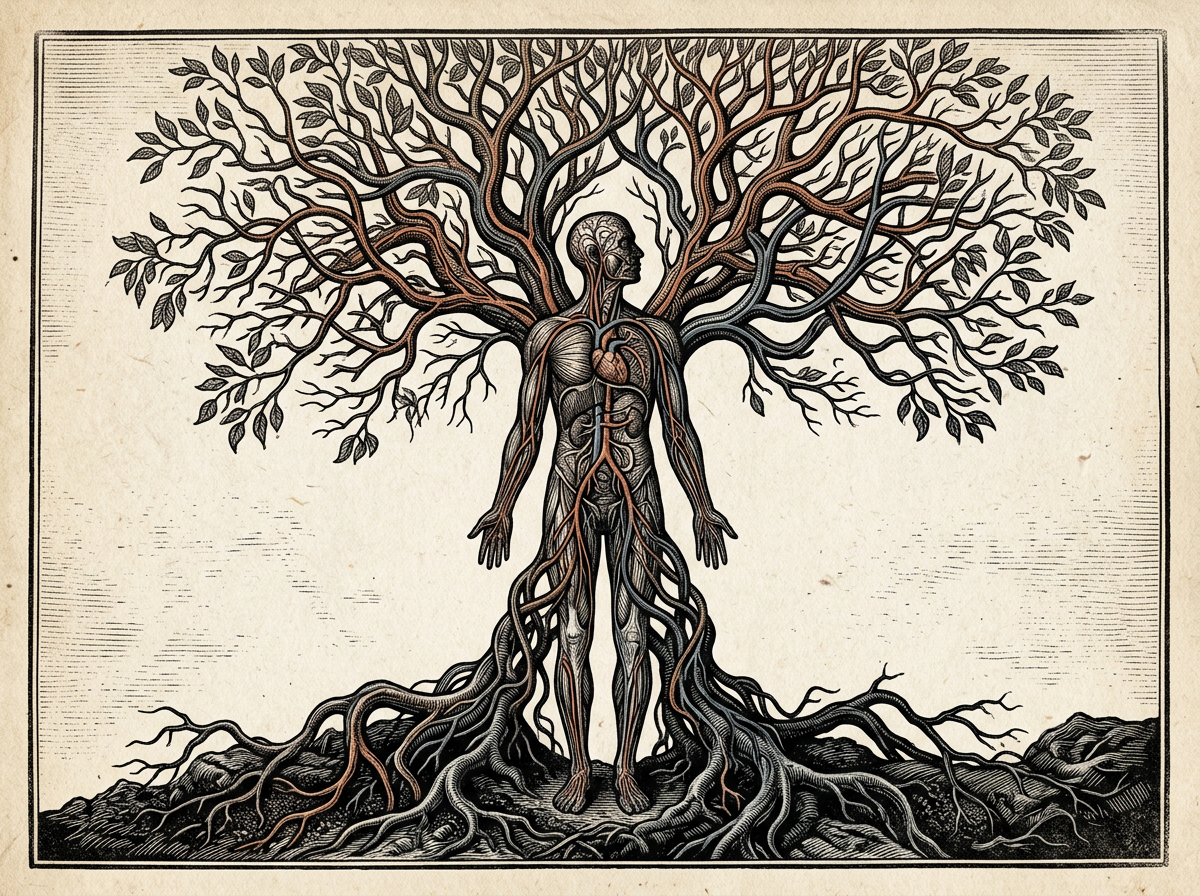
REDUCTIVE BIOLOGY: MACHINE METAPHORS
24 Nov 2026
Your nervous system is a living web, not a circuit board
What Are the Wires of the Nervous System? A Clear Guide to Neural Pathways
Quick Summary: What You Need to Know
The "wires" of the human body are specialized cells known as neurons, specifically their long, thread-like extensions called axons. These biological cables act as a high-speed communication network, transmitting electrical and chemical signals between the brain, the spinal cord, and every corner of your body at speeds reaching up to 268 miles per hour. Without these intricate neural pathways, your body would be unable to process sensory information, coordinate movement, or regulate essential involuntary functions like heartbeat and digestion.
Background & Essential Facts
To understand the nervous system, it helps to imagine it as the world’s most sophisticated telecommunications grid. At the center of this grid sits the Central Nervous System (CNS), comprised of the brain and spinal cord, which acts as the "command center." Branching out from this center is the Peripheral Nervous System (PNS), which functions like a vast network of fiber-optic cables reaching every extremity, organ, and skin cell.
The "wires" themselves are primarily axons. Think of an axon as a copper wire coated in rubber insulation; in the body, that insulation is a fatty substance called myelin. Myelin is crucial—it prevents signal leakage and speeds up the transmission of electrical impulses. When this "insulation" is damaged, signals slow down or misfire, which is the underlying cause of various neurological conditions.
According to the National Institutes of Health (NIH), this system is not static. It is a dynamic, living web that continuously adapts based on your experiences, a process scientists call neuroplasticity. Whether you are typing on a keyboard, feeling the warmth of a mug, or simply breathing while you sleep, you are relying on billions of these neural pathways firing in perfect, rapid-fire synchronization.
How To Take Action / What To Do
STEP 01: Identify Neural Types
Not all wires are built for the same job. To understand how your body communicates, you must distinguish between the two primary "lanes" of traffic:
- Sensory Nerves (The Input): — These act as your body's data collectors. They carry information from the outside world—temperature, pressure, pain, and light—back to the brain. If you touch a hot stove, it is the sensory nerves that scream "Danger!" to your processing center.
- Motor Nerves (The Output): — These are the command-givers. Once the brain interprets the sensory data, it sends an instruction through motor nerves to your muscles. In the case of the hot stove, the motor nerves deliver the "Pull away now!" command to your arm muscles before you even consciously register the pain.
By observing your own reactions throughout the day, you can begin to distinguish when you are receiving sensory input versus executing a motor command.
STEP 02: Trace the Pathway
Understanding the "highway" system of your body helps demystify how you function. Signals travel in a specific, tiered route:
- Peripheral Receptors: — These are the sensors in your skin, eyes, and muscles that detect changes in the environment.
- Spinal Tracts: — Once a signal is captured, it travels along peripheral nerves into the spinal cord. The spinal cord acts as a massive "trunk line," bundling millions of axons together to transport the data upward.
- Central Processing: — The signal reaches the brain, where the thalamus and cortex interpret the message. The brain then generates a response, sending a signal back down the spinal cord to the appropriate motor nerves to execute the necessary movement.
Visualizing this as a round trip—from the fingertips to the brain and back—can help you appreciate the incredible efficiency of your biological circuitry.
STEP 03: Support Nerve Health
Since your nervous system is essentially electrical, it requires specific fuel to maintain its conductivity and repair its insulation. To keep your "wires" in peak condition:
- Fuel with B Vitamins: — Vitamins B1, B6, and B12 are essential for the production and repair of the myelin sheath. Incorporate lean meats, eggs, fortified cereals, and leafy greens into your diet to keep your neural insulation thick and functional.
- Prioritize Cardiovascular Exercise: — Nerve health is dependent on blood flow. Because your nervous system is highly metabolic, it requires a steady supply of oxygen and glucose. Regular aerobic exercise increases blood flow to peripheral nerves, supporting their health and longevity.
- Sleep for "Neural Maintenance": — Your brain performs its most significant "housekeeping" while you sleep. The glymphatic system—a waste clearance system in the brain—activates during deep sleep to flush out toxic byproducts that accumulate during the day, effectively "cleaning" the neural wires and synapses for the next morning.
Key Takeaways
- Axons are the body's wires: — Specialized, myelin-coated fibers carry high-speed electrical and chemical signals across the entire body.
- Traffic is bi-directional: — Sensory nerves bring information into the brain, while motor nerves carry commands from the brain to the muscles.
- Maintenance is mandatory: — You can protect your nervous system by eating B-vitamin-rich foods, exercising to improve circulation, and ensuring quality sleep to allow for neural "cleaning" and repair.
Chaff & Wheat Analysis
The Chaff: The guide reduces a dynamic, adaptive biological web into an industrial telecommunications grid of passive insulated wires. This mechanical oversimplification encourages readers to treat intricate, holistic neurobiology as an engineered machine that can be mechanically serviced with quick behavioral tune-ups.
The Wheat: The core insight remains sound: the body's communication pathways require fundamental physical stewardship to stay resilient. Prioritizing consistent sleep, aerobic movement, and essential micronutrients directly sustains the biological architecture that governs daily perception and action.
Related dispatches
MODERN RESTRAINT: CURBED ENTITLEMENT · The Bend Index
Moderation is not puritanism: finding humility in an age of impulse
25 Nov 2026
TACTICAL OVERSIGHT: POWER DYNAMICS · The Bend Index
Setting boundaries requires the leverage to survive their enforcement
25 Nov 2026
FALSE METAPHOR: EFFORTLESS ATTRACTION · The Bend Index
True magnetism requires an external strike, not passive alignment
25 Nov 2026
LEISURE DRIFT: PRESCRIPTIVE CONSUMPTION · The Bend Index
When mindless entertainment is repackaged as an actionable life protocol
24 Nov 2026