EDITORIAL LENS: PROVINCIAL DETACHMENT
23 Nov 2026
Seneca’s provincial roots prove philosophical clarity often begins on the periphery
Where Was Seneca Born? Tracing the Roots of the Stoic Philosopher
Quick Summary: What You Need to Know
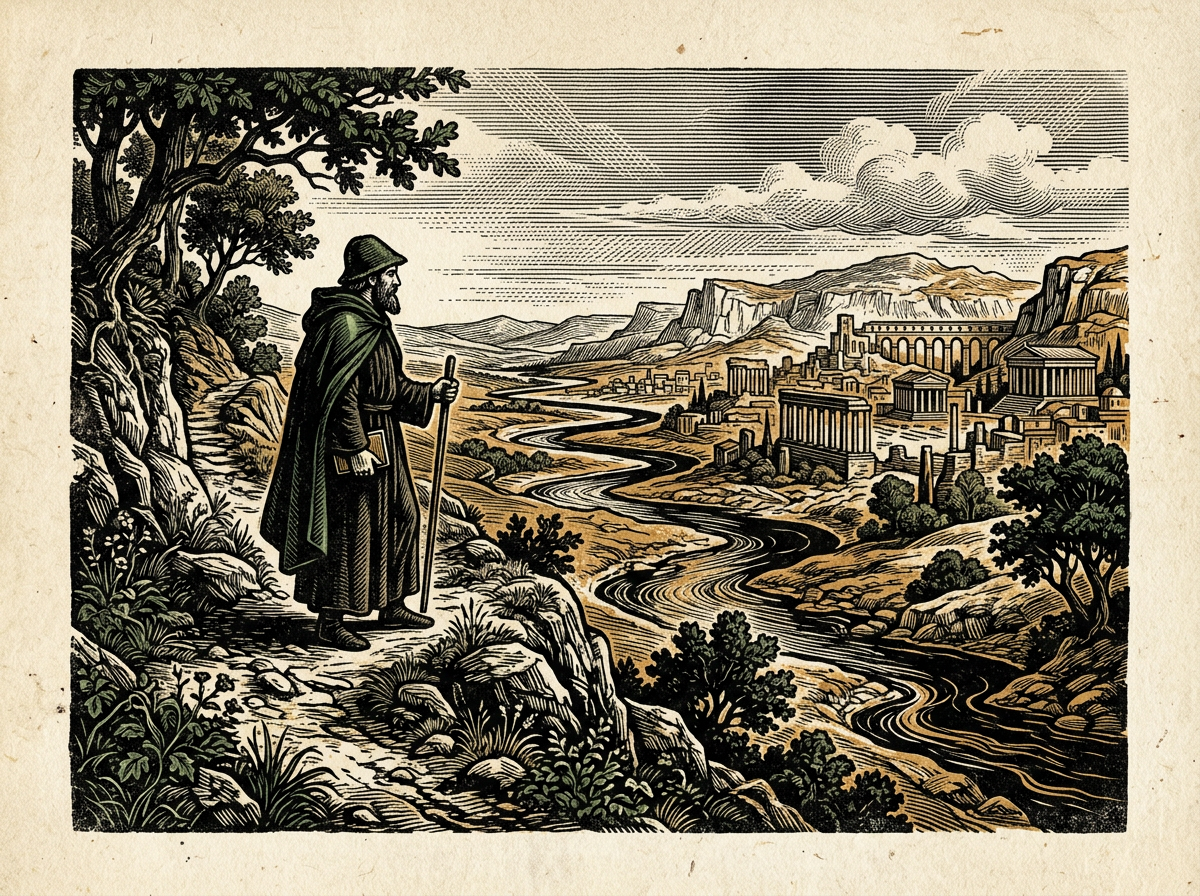
Lucius Annaeus Seneca—one of history's most celebrated Stoic philosophers, dramatists, and statesmen—was born in Cordoba (known in antiquity as Corduba), Hispania Baetica, which is modern-day Spain, around 4 BC. Contrary to popular assumption, this towering figure of the Roman Empire was not born in the bustling heart of Rome itself, but rather in the distant, vibrant provinces of the Iberian Peninsula. His distinct background as a provincial outsider deeply influenced his worldview, his literary voice, and his complex navigation of Roman politics.
Background & Essential Facts
To truly understand Seneca, you have to look beyond the marble columns of the Roman Senate and trace his origins back to the sun-drenched hills of southern Spain. Born into a wealthy and influential equestrian family, Seneca was part of a dynasty deeply embedded in both local provincial life and the broader imperial administration.
His father, known to history as Seneca the Elder, was an elite rhetorician who traveled between Hispania and Rome, collecting speeches and educating young minds. His mother, Helvia, came from a prominent provincial family and provided a stable, intellectually stimulating upbringing.
For a young Seneca, the provincial city of Corduba offered a fascinating dual identity. On one hand, it was a thriving Roman colony filled with veterans, merchants, and administrators eager to replicate Roman culture, architecture, and law. On the other hand, it was worlds away from the cutthroat political intrigue, corruption, and sensory overload of Rome.
When Seneca eventually moved to Rome as a young man to pursue his education in philosophy and rhetoric, he did so with the acute perspective of an outsider. He understood the majesty and power of the Roman Empire, but he also maintained the grounded, observant eye of someone whose roots lay firmly in the provinces. This unique vantage point allowed him to write piercingly about human ambition, the vanity of wealth, the inevitability of change, and the core tenets of Stoicism—themes that would define his timeless essays and letters.
How To Take Action / What To Do
If you want to deeply understand Seneca's roots, his provincial perspective, and how to connect with his physical history today, follow these three practical steps.
STEP 01: Verify the Birthplace City
Begin your historical journey by identifying the exact geographic and cultural roots of the philosopher. Corduba (modern Cordoba) was not just a random outpost; it was the capital of the Roman province of Hispania Baetica.
- Research the geography: — Understand that Baetica was one of the wealthiest and most Romanized provinces in the entire empire, famous for its olive oil, wine, and mineral wealth.
- Acknowledge the timeline: — Note that Seneca was born around 4 BC, a tumultuous and pivotal era bridging the end of the Roman Republic's civil wars and the consolidation of the Roman Empire under Augustus. By recognizing his birthplace, you strip away the myth of the "pure Roman" and replace it with the reality of a globalized, multicultural ancient empire.
STEP 02: Analyze Provincial Influence
Next, examine how being born outside of Rome fundamentally shaped Seneca’s career as a writer, statesman, and Stoic thinker. Provincial writers often felt a powerful pressure to over-prove their Roman loyalty and cultural mastery, which may have fueled Seneca's legendary ambition, his rapid rise in the Senate, and his eventual appointment as tutor and advisor to the emperor Nero.
- Read through a provincial lens: — When reading his Letters from a Stoic or his essays on the shortness of life, look for his recurring themes of exile, displacement, and emotional self-reliance.
- Connect biography to philosophy: — Consider how a man who lived on the fringes of the empire could write so eloquently about controlling one's internal state regardless of external chaos. His provincial origins gave him a healthy skepticism toward the superficial glamor of Rome, providing fertile ground for his deep, practical Stoic philosophy.
STEP 03: Explore Historical Landmarks
If you ever travel to southern Spain, bring Seneca's history to life by visiting the surviving archaeological sites and cultural landmarks in modern Cordoba dedicated to his legacy.
- Visit the Archaeological and Ethnological Museum of Cordoba: — Here, you can view incredible Roman artifacts, sculptures, and architectural fragments from the exact era in which Seneca's family lived and thrived.
- Walk the Roman Bridge and Old Town: — Stroll through the ancient streets of Cordoba, where the echoes of Roman engineering, stone walls, and plazas still remain. By walking the same ground where a young Seneca once stood, you close the gap between ancient philosophy and modern reality, grounding his abstract ideas in tangible geography.
Key Takeaways
- The Exact Birthplace: — Seneca was born in Cordoba (Corduba), Hispania Baetica (modern-day Spain), around 4 BC.
- The Provincial Advantage: — Growing up outside of Rome gave Seneca a unique outsider's perspective, deeply shaping his writings on ambition, philosophy, and Roman society.
- Modern Exploration: — You can trace Seneca's roots today by exploring the rich Roman archaeological sites, museums, and ancient streetscapes preserved in modern Cordoba.
Chaff & Wheat Analysis
The Chaff: The piece strains to convert basic biographical trivia into a formulaic self-help checklist, mistaking historical tourism for philosophical practice. It oversimplifies ancient identity by framing provincial origins merely as an underdog advantage rather than a complex political reality.
The Wheat: Genuine discernment requires psychological distance from the centers of status and ambition you inhabit. Seneca’s enduring Stoic insights demonstrate that emotional self-reliance is rarely bred within echo chambers of power, but forged by observing them with the detached gaze of an outsider.
Related dispatches
MODERN RESTRAINT: CURBED ENTITLEMENT · The Bend Index
Moderation is not puritanism: finding humility in an age of impulse
25 Nov 2026
TACTICAL OVERSIGHT: POWER DYNAMICS · The Bend Index
Setting boundaries requires the leverage to survive their enforcement
25 Nov 2026
FALSE METAPHOR: EFFORTLESS ATTRACTION · The Bend Index
True magnetism requires an external strike, not passive alignment
25 Nov 2026
LEISURE DRIFT: PRESCRIPTIVE CONSUMPTION · The Bend Index
When mindless entertainment is repackaged as an actionable life protocol
24 Nov 2026