CORE DOCTRINE: RADICAL FREEDOM
19 Nov 2026
Existential dread becomes personal agency only when you drop the excuses
What Is Existentialism? Understanding the Philosophy of Freedom and Choice
Quick Summary: What You Need to Know
Existentialism is a 19th- and 20th-century philosophical movement that explores the problem of human existence, centering entirely on individual freedom, personal responsibility, and choice. Put simply, existentialism posits that humans are born first without a pre-written purpose, and it is up to each individual to create their own meaning in an inherently indifferent universe. Championed by intellectual giants like Jean-Paul Sartre, Simone de Beauvoir, and Albert Camus, this philosophy strips away external dogmas and demands that you take the steering wheel of your own life.
Background & Essential Facts
When people hear the word "existentialism," they often picture gloomy cafes in post-war Paris, cigarette smoke, and deep, brooding thinkers pondering the pointlessness of life. While it is true that existentialism does not sugarcoat reality, its core message is deeply empowering.
The roots of the movement trace back to the 19th century with thinkers like Søren Kierkegaard and Friedrich Nietzsche, who challenged traditional systems of religion and objective morality. They argued that society was offering people comfortable, pre-packaged scripts for how to live, robbing them of their authentic individuality.
However, existentialism truly exploded into the global consciousness during and after World War II. In a world scarred by unimaginable devastation and systemic cruelty, traditional comforting narratives—that everything happens for a higher reason, or that justice always prevails—seemed hollow. French philosopher Jean-Paul Sartre, alongside writers like Simone de Beauvoir and Albert Camus, stepped into this ideological vacuum. They argued that because there is no grand, pre-determined blueprint for human life, we are radically and terrifyingly free.
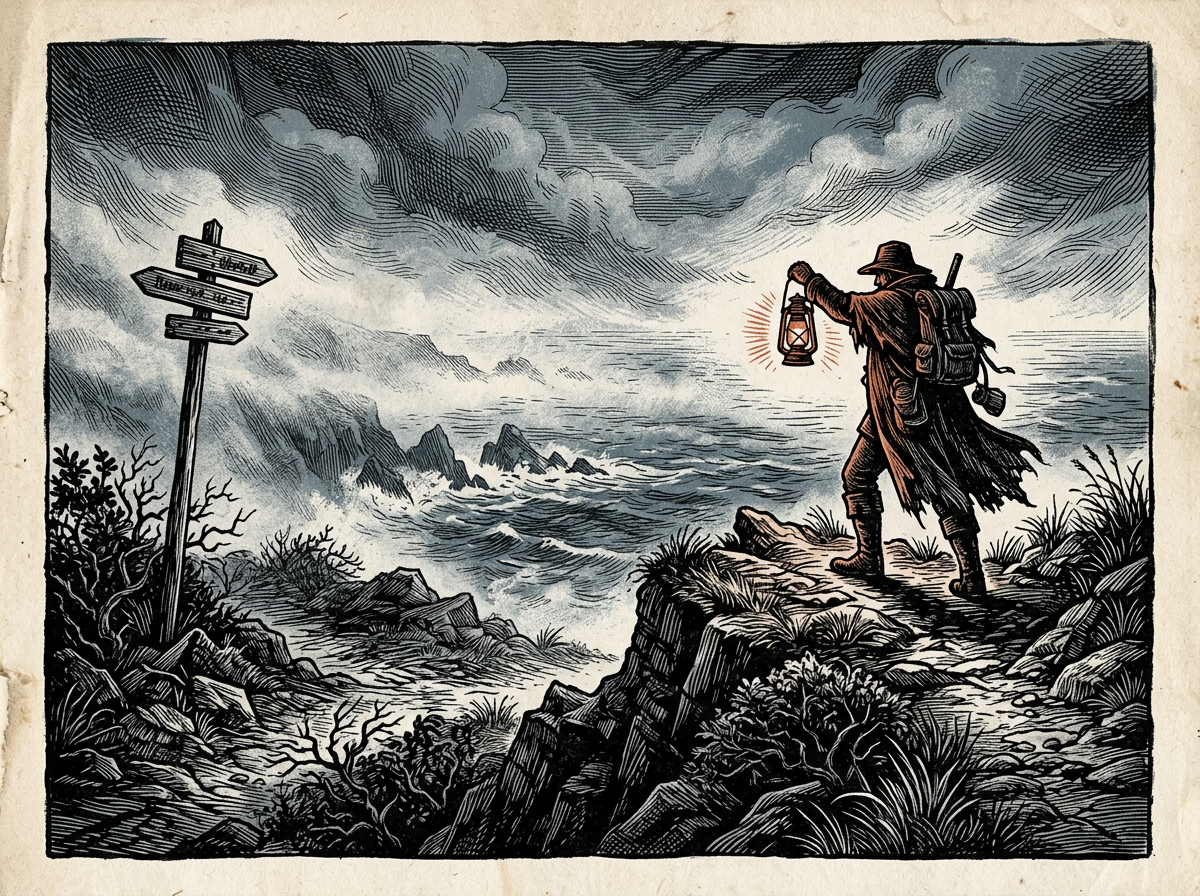
Rather than viewing this freedom as a burden, existentialists challenge us to accept it as our greatest superpower. You are not a passive character in a story written by someone else; you are the author, the director, and the main actor all at once.
How To Take Action / What To Do
Understanding existentialism as a dusty academic concept misses the point entirely. Existentialism was designed to be lived. Here is how you can apply its core tenets to your daily life:
STEP 01: Grasp Core Concepts
To live like an existentialist, you first need to understand the movement's most famous foundational idea: "existence precedes essence."
Historically, philosophers believed that humanity had a fixed essence (a predefined nature or purpose) built into us by God, nature, or the universe. Existentialism flips this completely on its head. It argues that you exist first. You are born into this world without a built-in instruction manual, manual factory settings, or pre-assigned destiny. Only through your actions, choices, and lived experiences do you carve out your "essence." Stop searching the universe for your hidden purpose as if it's a lost set of keys; realize that you are the one forging your purpose every single day through what you choose to do.
STEP 02: Identify Key Thinkers
No philosophy exists in a vacuum. To truly master the mindset of freedom and choice, study the different lenses through which history's greatest existentialists viewed the absurdity of life:
- Jean-Paul Sartre: — Focuses on radical freedom and responsibility. He famously noted that we are "condemned to be free"—meaning that even refusing to choose is still a choice.
- Albert Camus: — Explores the concept of the "Absurd"—the conflict between our human desire for inherent meaning and the cold, silent universe that offers none. Camus suggested that instead of despairing, we should accept this absurdity and live defiantly, passionately, and freely anyway.
- Friedrich Nietzsche: — Challenged herd mentality and urged individuals to forge their own values rather than blindly following cultural, religious, or societal dogmas.
By reading their works, you will see that existentialism isn't a monolith; it’s a toolbox of perspectives designed to help you think for yourself.
STEP 03: Apply It to Daily Life
The ultimate test of existentialism is action. Take radical personal responsibility for your decisions.
Most of us spend a surprising amount of time deflecting blame: “I had to take this job because of the economy,” or “I act this way because of how my parents raised me.” Existentialism calls this "bad faith"—the act of pretending you don't have a choice when you actually do. To apply this practically, stop hiding behind external dogmas, peer pressure, or "the way things are done." When facing a major life decision, consciously drop the excuses. Own the fact that whatever path you walk next is entirely your creation. If you hate your career, your routine, or your lifestyle, an existentialist doesn't tell you to wait for a miracle; they tell you to choose differently.
Key Takeaways
- Existence Precedes Essence: — You are born without a predefined purpose; your choices and actions are what define who you are.
- Embrace Radical Freedom: — Thinkers like Sartre, Camus, and Nietzsche taught us that while life has no inherent script, you have total freedom to write your own.
- Reject Bad Faith: — Stop relying on external dogmas or making excuses; take total personal responsibility for your life, your happiness, and your path forward.
Chaff & Wheat Analysis
The Chaff: The article challenges the idea that purpose must be discovered in a prewritten life script, but replaces it with another oversimplification: that you have total freedom and existential dread becomes agency simply by dropping excuses. Economic pressures, upbringing, and unequal opportunities are real constraints, not automatically evidence of bad faith.
The Wheat: You can build meaning through chosen commitments without waiting for certainty or a predetermined purpose. Agency means identifying the choices genuinely available within your circumstances, taking responsibility for those choices, and seeking support or collective change where individual effort is insufficient.
Related dispatches
MODERN RESTRAINT: CURBED ENTITLEMENT · The Bend Index
Moderation is not puritanism: finding humility in an age of impulse
25 Nov 2026
TACTICAL OVERSIGHT: POWER DYNAMICS · The Bend Index
Setting boundaries requires the leverage to survive their enforcement
25 Nov 2026
FALSE METAPHOR: EFFORTLESS ATTRACTION · The Bend Index
True magnetism requires an external strike, not passive alignment
25 Nov 2026
LEISURE DRIFT: PRESCRIPTIVE CONSUMPTION · The Bend Index
When mindless entertainment is repackaged as an actionable life protocol
24 Nov 2026