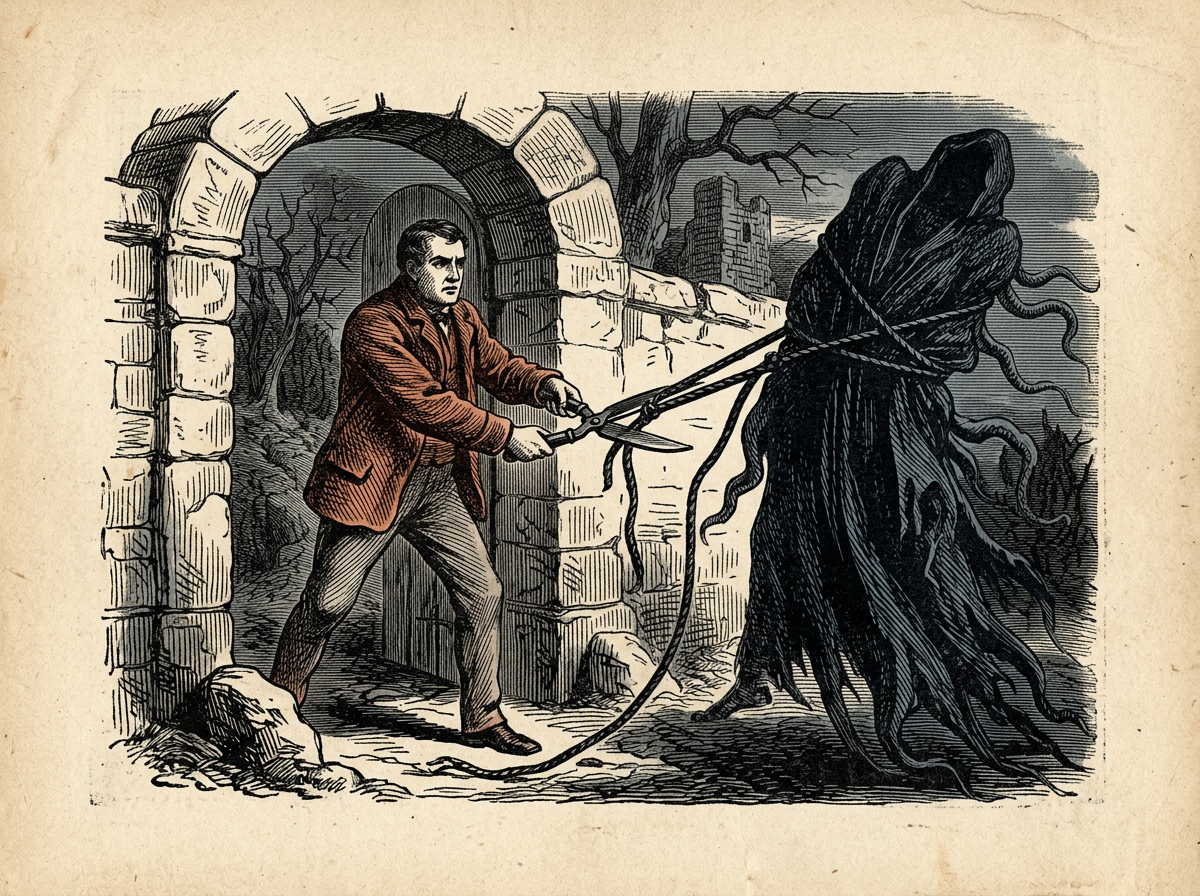
SURVIVAL HYGIENE: ABSOLUTE DETACHMENT
18 Nov 2026
Why total psychological disengagement is a survival strategy, not avoidance
The Architecture of Absolute Detachment: A Critical Analysis of the "No Contact" Protocol in Pathogenic Narcissism
Abstract
The clinical and interpersonal management of pathological narcissism and psychopathy presents severe emotional hazards to victims, often resulting in chronic anxiety, complex trauma, and psychological entrapment. Among clinical interventions, the "No Contact" protocol has emerged as a cornerstone recommendation by trauma specialists and survivors alike. This study analyses the theoretical constructs articulated by psychologist Sam Vaknin regarding the rigorous mechanics of No Contact, contextualising his 27-component framework within established psychological literature on trauma bonding, intermittent reinforcement, and systemic boundary maintenance. Furthermore, we examine the structural limitations of legal and mental health institutions in recognising narcissistic abuse and propose actionable strategies for total psychological disengagement.
Introduction: The Fallacy of Partial Contact
In contemporary psychological discourse concerning toxic relationships and Cluster B personality disorders (specifically Narcissistic Personality Disorder, or NPD), traditional advice often encourages conflict resolution, mediation, or "low contact" communication [02:55]. However, psychoanalytic theorist and author Sam Vaknin argues that such compromises are fundamentally flawed.
Vaknin contends that the "No Contact" protocol originally conceptualised by him in 1995 is not merely a breakup strategy or a passive decision to walk away. Rather, it is a complex, multi-layered system comprising 27 strict behavioural rules. Any breach, exception, or gray area invalidates the entire protocol, as disordered individuals exploit the smallest opening to re-establish psychological control.
Theoretical Framework: Trauma Bonds and Intermittent Reinforcement
To understand why partial contact or "checking in" fails, we must examine the neurobiology of trauma bonds, heavily documented in psychological literature regarding abusive relationships (Dutton & Painter, 1993).
The Intermittent Reinforcement Trap
Pathological narcissists rely on cycles of idealisation and devaluation. This unpredictable oscillation creates a powerful intermittent reinforcement schedule, the same psychological mechanism that drives addiction in gambling. Every text message read, every social media profile checked, and every brief interaction acts as a micro-reward, reactivating neural pathways associated with anticipation and relief.
The Narcissistic Supply Loop
Vaknin emphasises that a narcissist perceives any form of engagement, whether positive (praise, nostalgia) or negative (anger, defensive arguments), as narcissistic supply [01:38]. Even hostile engagement confirms that the target remains emotionally tethered, providing the fuel required to sustain the abuser's false self.
Theoretical Comparison: Vaknin, Mediation, and Trauma Models
To fully evaluate how different disciplines approach post-separation dynamics, we can examine how Sam Vaknin’s psychoanalytic disengagement model, traditional family mediation, and trauma-informed recovery frameworks evaluate core philosophical orientation, the nature of interpersonal friction, and institutional engagement.
Regarding core philosophy, Vaknin’s framework advocates for absolute zero interaction, the complete elimination of all direct and indirect contact, with zero emotional or digital footprint (Vaknin, 2025). In contrast, traditional mediation and co-parenting models encourage structured dialogue, collaborative problem-solving, and shared decision-making to handle logistics (Emery, 2012). Trauma-informed recovery frameworks adopt a middle ground centred on boundary-driven safety, prioritising psychological stabilisation and emotional safety first while adapting contact levels strictly to objective safety needs (Herman, 1992).
These differing philosophies shape how each model interprets interpersonal friction. Vaknin views friction and conflict as active fuel for the abuser, arguing that any argument or negotiation feeds the narcissist's need for drama and control (Vaknin, 2025). Traditional mediation treats conflict as negotiable friction that can be successfully managed through neutral third parties. Meanwhile, trauma-informed literature views unstructured friction as a source of re-traumatisation that reignites hypervigilance and delays complex PTSD recovery (Walker, 2013).
Finally, the models diverge significantly in how they approach institutional and legal engagement. Vaknin advises quiet compliance, obeying court orders to the letter to avoid legal retaliation, while privately maintaining absolute emotional detachment (Vaknin, 2025). Traditional mediation models rely heavily on active participation through courts, therapists, and mediators to arbitrate disputes and enforce fairness. Trauma-informed frameworks advocate for cautious navigation, utilising legal protections (such as guardians ad litem or supervised exchanges) while maintaining rigorous emotional boundaries like the "gray rock" method.
The 27-Component Protocol and Institutional Hurdles
The Mechanics of Total Detachment
According to Vaknin's framework, true No Contact requires absolute operational hygiene:
- Digital Excision — Blocking across all platforms, deleting unread messages sight unseen to prevent the adrenaline spike of reading threats or Hoovering attempts, and closing shared digital accounts.
- Physical Boundaries — Refusing entry to the home under any circumstances. If child visitation requires a handover, the abuser must remain at the threshold or in a neutral space, utilising third parties (lawyers, neutral neighbours) to manage logistics without verbal engagement.
- Material Rejection — Returning gifts, financial transfers, or unsolicited items immediately through neutral channels to prevent establishing psychological hooks [06:19].
Institutional Blindness
A major hurdle in executing No Contact arises from societal and legal institutions. Family courts, mediators, and well-meaning mental health professionals often operate under the assumption of good-faith mutuality, believing that both parties want to resolve conflict amicably. Vaknin warns that courts frequently mandate unnecessary contact (e.g., joint counselling or poorly structured co-parenting arrangements) because they fail to recognise narcissistic pathology. Defying courts openly leads to severe legal repercussions; therefore, victims must comply minimally with institutional mandates while maintaining strict internal psychological detachment.
- Practical Implementation and Recovery Roadmap
For individuals seeking to operationalise absolute disengagement, recovery requires a systematic approach:
- Audit All Access Points — Inventory every digital, physical, and social channel through which the abuser can breach boundaries.
- Implement the "Gray Rock" or Silent Method for Mandated Contact: If children or legal mandates require communication, keep all interactions brief, neutral, emotionless, and restricted solely to logistics.
- Radical Environmental Changes — In extreme cases of stalking or harassment, relocating residence, changing workplaces, and altering phone numbers serve as vital survival measures [09:27].
Conclusion
The "No Contact" protocol is not a petty tactic of avoidance, but a rigorous psychological imperative for survival against pathological narcissism. By understanding that any form of engagement serves as toxic fuel for the abuser, victims can break the cycle of intermittent reinforcement. While societal institutions continue to struggle with recognizing the subtle devastation of narcissistic abuse, absolute boundary maintenance remains the single most effective pathway to psychological liberation.
References
- Bowlby, J. (1969). Attachment and Loss: Vol. 1. Attachment. Basic Books.
- Dutton, D. G., & Painter, S. L. (1993). Emotional attachments in abusive relationships: A test of traumatic bonding theory. Violence and Victims, 8(2), 105–120.
- Emery, R. E. (2012). Renegotiating Family Life: Divorce, Custody, and Mediation. Guilford Press.
- Herman, J. L. (1992). Trauma and Recovery: The Aftermath of Violence, From Domestic Abuse to Political Terror. Basic Books.
- Vaknin, S. (2025). Why No Contact Is the ONLY Way to Beat a Narcissist (Clip: Narcissism Summaries Channel) [Video file]. YouTube.
- Walker, P. (2013). Complex PTSD: From Surviving to Thriving. Azure Coyote.
For those navigating complex relational dynamics and abusive patterns, a helpful visual and experiential overview can be explored via this Why No Contact Is the Only Way to Beat a Narcissist overview, which breaks down the core mechanics of absolute detachment and psychological boundaries.
#Prof. Sam Vaknin - Why No Contact Is the ONLY Way to Beat a Narcissist (Clip: Narcissism Summaries Channel) (https://www.youtube.com/watch?v=hqK0MabjWng)
Chaff & Wheat Analysis
The Chaff: The article challenges the myth that continued dialogue is always healthier than disengagement, but replaces it with another absolute: that total no contact is the only route to safety and any lapse invalidates recovery. Neither a diagnostic label nor this rigid protocol can determine what is safest in every abusive relationship.
The Wheat: Reducing an abusive person's access can support safety and recovery; no contact can be protective rather than avoidant when safe and feasible. Where children, court orders, or stalking complicate separation, use individualized safety planning, preserve potential evidence, and seek specialist support for necessary communication—without demanding perfect emotional detachment.
Related dispatches
MODERN RESTRAINT: CURBED ENTITLEMENT · The Bend Index
Moderation is not puritanism: finding humility in an age of impulse
25 Nov 2026
TACTICAL OVERSIGHT: POWER DYNAMICS · The Bend Index
Setting boundaries requires the leverage to survive their enforcement
25 Nov 2026
FALSE METAPHOR: EFFORTLESS ATTRACTION · The Bend Index
True magnetism requires an external strike, not passive alignment
25 Nov 2026
LEISURE DRIFT: PRESCRIPTIVE CONSUMPTION · The Bend Index
When mindless entertainment is repackaged as an actionable life protocol
24 Nov 2026