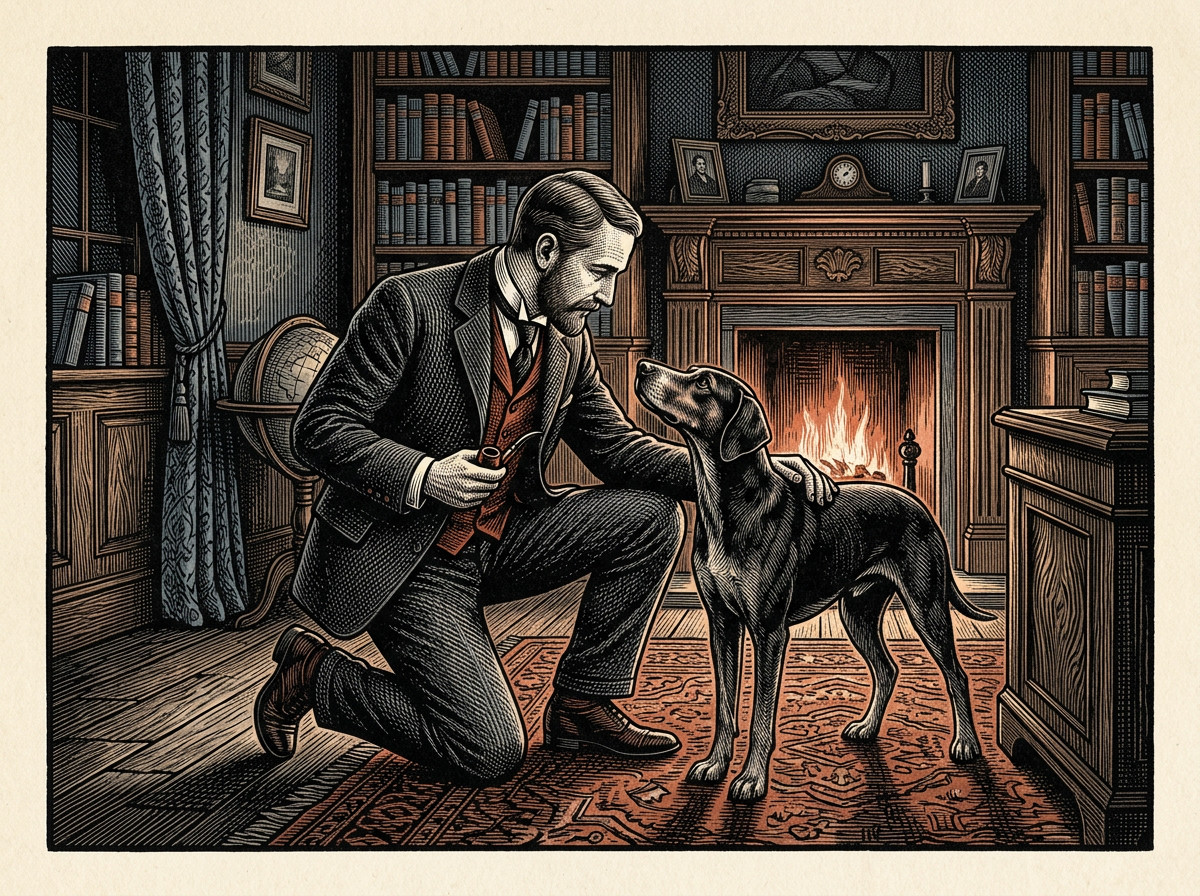
MUTUAL ATTUNEMENT: CANINE PERCEPTION
18 Nov 2026
How aligning your facial expressions with your voice strengthens canine communication
How to Tell If Dogs Can Read Human Facial Expressions
Quick Summary: What You Need to Know
Yes, dogs can indeed read and interpret human facial expressions, utilizing their keen cognitive abilities to understand emotions like anger or happiness. Groundbreaking research published in Biology Letters by the University of Lincoln and the University of São Paulo proves that dogs actively combine visual facial cues and auditory tones to recognize human feelings. This extraordinary capability highlights the deep, thousands-of-years-old evolutionary bond shared between humans and canines.
Background & Essential Facts
If you have ever felt like your dog knows exactly how you are feeling—whether you are glowing with joy after a promotion or slumping on the couch with the blues—you are not imagining things. For centuries, pet owners have claimed that their dogs have an almost psychic knack for reading human emotions. Now, science backs them up.
Historically, scientists debated whether dogs truly understood our facial expressions or if they were simply reacting to our tone of voice, body language, or the smell of our stress hormones. However, recent behavioral studies have put that debate to rest. Researchers in the UK and Brazil designed experiments showing dogs pictures of human faces expressing different emotions alongside matching or clashing vocal tones (such as a happy voice paired with an angry face).
The results were remarkable. The dogs consistently spent more time looking at facial expressions that matched the emotional tone of the audio they were hearing. This means dogs do not just hear your mood or smell your anxiety; they actually look at your face, process the visual data, and synthesize it with what they hear to form a complete picture of your emotional state. This skill is not something your average pet has to painstakingly learn—it is a byproduct of co-evolving alongside humans for tens of thousands of years, making them uniquely attuned to our social signals.
How To Take Action / What To Do
Understanding that your dog reads your face changes the way you should communicate with them every single day. Here is how you can use this knowledge to build a stronger, clearer bond with your furry best friend.
STEP 01: Observe Eye Contact
Start by paying close attention to how your dog looks directly at your face. When you walk into a room or react to something on television, look at your dog—chances are, they are already looking right at you. Dogs actively seek out human eye contact to gauge your current emotional state and intent. If you look tense or upset, your dog will often lower their posture or look away to appease you. If you look relaxed and approachable, they will soft-gaze back or wag their tail. Notice these micro-expressions in your dog to understand how your own face is immediately affecting their mood.
STEP 02: Match Tone with Expression
Because science proves dogs process both visual and auditory cues simultaneously, you should make sure your messages are clear and consistent. If you are trying to scold your dog for chewing on a shoe, do not smile or laugh while using a stern voice—this mixed messaging confuses them. Instead, pair your serious, neutral, or slightly stern facial expressions with a calm, firm vocal tone. Conversely, when you are praising them, light up your face with a wide smile and use an upbeat, high-pitched voice. Matching your expressions with your tone helps your dog process your emotional signals accurately without unnecessary stress.
STEP 03: Test Positive Reinforcement
Put your dog's facial-reading skills to the test during your next training session. Instead of relying solely on treats and voice commands, show a happy, smiling, and enthusiastic face when your dog successfully completes a command like "sit" or "stay." Watch how your dog responds to these positive visual cues. You will likely notice that a bright, smiling face acts as a powerful reward in and of itself, often sparking a tail wag and boosting their eagerness to please you during training.
Key Takeaways
- Scientific Proof: — Studies published in Biology Letters confirm that dogs successfully combine visual facial expressions and auditory cues to recognize human emotions like happiness and anger.
- Evolutionary Connection: — This ability stems from a deep evolutionary bond, meaning dogs are biologically wired to pay attention to human faces.
- Clear Communication: — To avoid confusing your pet, always match your facial expressions with your vocal tone, using positive visual cues like smiling during training sessions.
Chaff & Wheat Analysis
The Chaff: The article turns evidence that dogs can match emotional facial and vocal cues into the stronger claim that they know exactly how we feel. That finding does not establish psychic-like understanding, an exclusively innate ability, or that a smile alone is a powerful training reward.
The Wheat: Calm, consistent facial and vocal cues may help make communication clearer, but their usefulness depends on the individual dog, its learning history, and the situation. Watch your dog’s whole-body response without forcing eye contact, and pair praise with rewards your dog demonstrably values rather than relying on smiles or scolding.
Related dispatches
MODERN RESTRAINT: CURBED ENTITLEMENT · The Bend Index
Moderation is not puritanism: finding humility in an age of impulse
25 Nov 2026
TACTICAL OVERSIGHT: POWER DYNAMICS · The Bend Index
Setting boundaries requires the leverage to survive their enforcement
25 Nov 2026
FALSE METAPHOR: EFFORTLESS ATTRACTION · The Bend Index
True magnetism requires an external strike, not passive alignment
25 Nov 2026
LEISURE DRIFT: PRESCRIPTIVE CONSUMPTION · The Bend Index
When mindless entertainment is repackaged as an actionable life protocol
24 Nov 2026