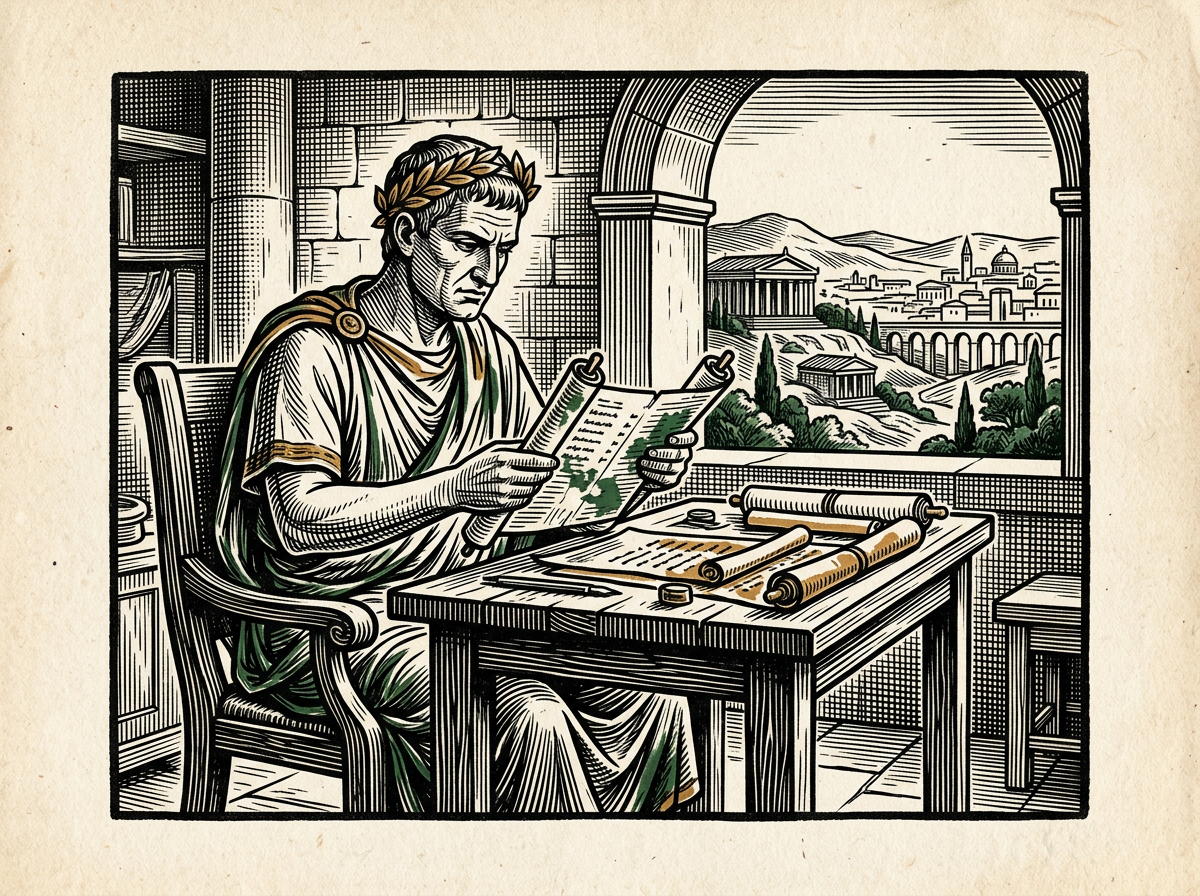
EXECUTIVE LESSON: RESTRAINED GROWTH
17 Nov 2026
Real leadership is built on quiet maintenance, not constant expansion.
Who is Antoninus Pius and What is His Legacy in the Roman Empire
Quick Summary: What You Need to Know
Antoninus Pius was the Roman Emperor who ruled from 138 to 161 AD, serving as the fourth of the legendary "Five Good Emperors." He is best known for presiding over the most peaceful and stable era in Roman history, achieving this state of tranquility without ever personally commanding a military campaign in the field. His reign is defined by a surplus in the imperial treasury, a commitment to legal reform, and a legacy of administrative brilliance that prioritized internal stability over territorial conquest.
Background & Essential Facts
To understand the Roman Empire at its zenith, you must look at the reign of Antoninus Pius. Born Titus Aurelius Fulvus Boionius Arrius Antoninus in 86 AD, he was not born into the purple; he was hand-picked by his predecessor, Hadrian, who required a stable successor to maintain the empire’s borders.
Unlike many of his predecessors—who were often defined by their conquest of new lands or their erratic personal lives—Antoninus was the ultimate steady hand. His nickname, "Pius," was bestowed upon him by the Senate shortly after he took power, reflecting his dutiful character and his insistence that the Senate be treated with respect.
While emperors like Trajan are remembered for expanding the map, Antoninus is remembered for keeping it intact. He stayed in Italy for the entirety of his 23-year reign, managing the vast Roman bureaucracy from his home rather than a battlefield tent. Historians like Cassius Dio and the authors of the Historia Augusta highlight his reign as a "Golden Age." By the time of his death in 161 AD, he left behind a fully functioning, wealthy, and secure empire, which he handed over to his adopted son, Marcus Aurelius.
How To Take Action / What To Do
If you want to truly grasp the weight of his legacy, you don’t need to dig through dusty library basements. You can analyze the era through these three practical approaches:
1. Study Primary Roman History Sources
To understand governance, you must go to the source. You don't have to read every ancient text, but focus your energy on the Historia Augusta and the records of Cassius Dio.
- The Action: — Look for the specific sections describing Antoninus’s rise to power. Note how these writers focus on his personality and his daily routine. Ask yourself: How did he manage the Senate differently than his predecessors? By identifying his reliance on consensus rather than force, you will gain a masterclass in effective leadership and diplomacy that still applies to modern management styles today.
2. Examine Architectural Impact
The physical environment of Rome changed significantly under his stewardship. While he didn't seek expansion, he invested heavily in the consolidation of power.
- The Action: — Research the Antonine Wall in Scotland. Unlike Hadrian’s Wall, this was a turf fortification that marked the northernmost limit of the empire. Then, compare this to the Temple of Antoninus and Faustina in the Roman Forum. Notice the difference: one represents defensive consolidation, the other represents cultural permanence. Visit these sites virtually or through archaeological archives to see how he used architecture to signal strength without needing to show aggression.
3. Analyze Economic Policies
One of the most impressive aspects of Antoninus Pius’s reign was his fiscal discipline. He inherited a healthy empire and made it even wealthier.
- The Action: — Review the economic indicators of his era. He was famously frugal, avoiding the extravagant public spending that often led to financial ruin for other emperors. Look into his management of the fiscus (the imperial treasury). By maintaining a massive surplus, he ensured that the Roman military remained well-fed and well-equipped without needing to tax the provinces into poverty. Applying this logic to your own research or professional life demonstrates that true wealth is often built through disciplined maintenance rather than high-risk growth.
Key Takeaways
- A Era of Peace: — Antoninus Pius remains one of the few Roman leaders who maintained total imperial stability for over two decades without the need for active personal warfare.
- The Power of Stability: — His focus on administrative duty and fiscal surplus proved that the Roman Empire flourished most when it was managed as a stable, bureaucratic state rather than a war machine.
- Legislative Excellence: — By prioritizing the Senate and maintaining legal consistency, he created a "Golden Age" model that allowed his successor, the philosopher-king Marcus Aurelius, to focus on the empire’s cultural and intellectual development.
Chaff & Wheat Analysis
The Chaff: The article challenges the myth that real leadership requires constant expansion and visible conquest. But its portrait of Antoninus Pius risks the opposite simplification: an emperor’s absence from the battlefield did not mean an empire without warfare or territorial ambition.
The Wheat: Quiet stewardship—maintaining institutions, improving administration, and preserving financial reserves—is substantive leadership, especially when an already functioning system needs continuity. Its value depends on monitoring changing threats and knowing when maintenance must give way to adaptation, not treating stability as proof that nothing needs to change.
Related dispatches
MODERN RESTRAINT: CURBED ENTITLEMENT · The Bend Index
Moderation is not puritanism: finding humility in an age of impulse
25 Nov 2026
TACTICAL OVERSIGHT: POWER DYNAMICS · The Bend Index
Setting boundaries requires the leverage to survive their enforcement
25 Nov 2026
FALSE METAPHOR: EFFORTLESS ATTRACTION · The Bend Index
True magnetism requires an external strike, not passive alignment
25 Nov 2026
LEISURE DRIFT: PRESCRIPTIVE CONSUMPTION · The Bend Index
When mindless entertainment is repackaged as an actionable life protocol
24 Nov 2026