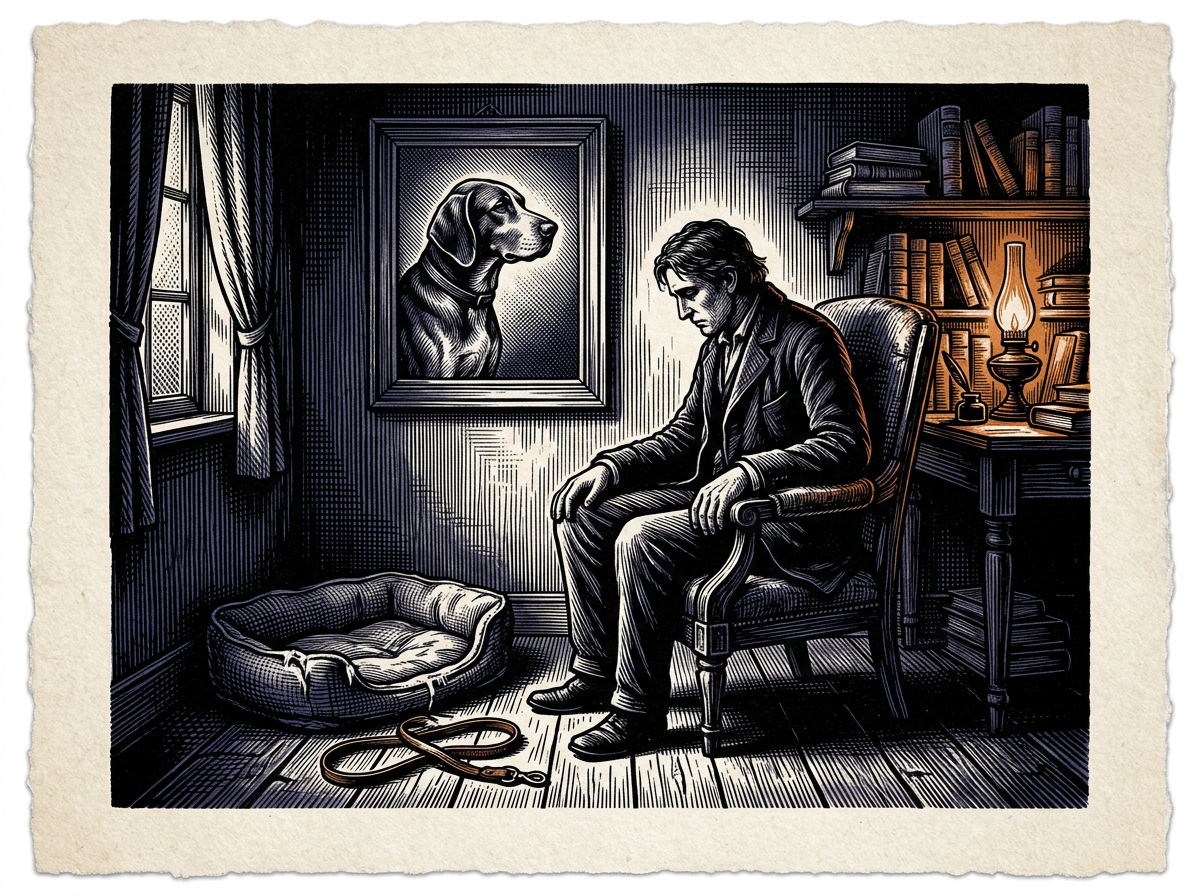
GRIEF EVASION: RAPID SUBSTITUTION
13 Sept 2026
Don't replace a lost companion before learning to mourn them
Thanatos and Substitution: Psychological Mechanisms and Grief Responses in Rapid Companion Animal Replacement
Academic Abstract & Executive Overview
This investigation examines the clinical implications of attempting to bypass acute disenfranchised grief through the immediate acquisition of a replacement pet. By synthesizing attachment theory with empirical thanatology, the paper analyzes the psychological risks associated with expedited animal substitution. Ultimately, the research establishes evidence-based mourning parameters designed to preserve the distinct identity of subsequent companion animals while honoring the primary attachment bond.
Theoretical Background & Literature Framework
The psychological architecture of human, animal bonds is rooted in evolutionary attachment theory, which posits that companion animals fulfill fundamental security and relational needs (Archer, 2001). When a companion animal dies, the resulting bereavement is frequently categorized as disenfranchised grief because societal structures routinely minimize the validity of pet loss (Quackenbush & Adams, 1985). This cultural invalidation often triggers defensive coping mechanisms, including the urge to engage in rapid companion animal replacement.
From a psychoanalytic perspective, rapid substitution operates as an unconscious defense against Thanatos, or the confrontation with mortality and separation anxiety. When an owner immediately procures a morphologically or behaviorally similar animal, they often attempt to deny the finality of the loss. Clinical thanatology demonstrates that this behavior bypasses the essential stages of mourning. As a result, unresolved grief is displaced onto the new animal, creating an environment where the incoming creature is unconsciously tasked with replicating the exact behavioral and emotional footprint of its predecessor (Archer, 2001).
Empirical observations in veterinary psychology indicate that rapid replacement frequently compromises the welfare of the new animal. If an owner projects idealized memories onto an unrelated living organism, they establish unrealistic behavioral expectations. This misalignment disrupts the formation of a secure attachment bond between the human and the new pet. Consequently, the psychological shortcut of immediate substitution often culminates in chronic affective distress rather than emotional resolution.
Methodological Application & Practical Recommendations
To mitigate the clinical risks of rapid substitution, practitioners and owners must implement structured behavioral and psychological protocols.
STEP 01: Grief Acceptance Protocol
Individuals must acknowledge the loss of the companion animal as a legitimate bereavement event, actively resisting social pressure to minimize the emotional impact (Quackenbush & Adams, 1985). Clinical experience shows that validating the magnitude of the loss prevents emotional compartmentalization. Owners should engage in active mourning practices, such as memorialization, to process the termination of the primary attachment bond safely.
STEP 02: Mourning Latency Period
Owners must implement a mandatory psychological buffer period following pet loss to process primary attachment bonds prior to introducing a new animal (Archer, 2001). This latency period varies according to individual psychological resilience, but it must be long enough to allow acute physiological and emotional distress to subside. Establishing this temporal boundary ensures that the decision to acquire a new pet stems from readiness rather than panic-driven substitution.
STEP 03: Individualized Attribution Assessment
Before bringing a new animal into the home, individuals must evaluate their underlying motives to ensure the incoming creature is valued as a distinct individual rather than a functional substitute. This assessment involves examining whether the prospective pet's breed, temperament, or appearance is selected merely to replicate the deceased animal. Cultivating an appreciation for the new animal's unique behavioral profile safeguards its psychological well-being and fosters a healthy, independent relational dynamic.
Key Empirical Takeaways
- Rapid companion animal replacement frequently functions as an inadequate defense mechanism against disenfranchised grief and mortality anxiety.
- Enforcing a structured mourning latency period is clinically necessary to resolve primary attachment trauma before establishing new bonds.
- Successful integration of a subsequent pet requires evaluating personal motives to guarantee the animal is perceived as an independent entity rather than a functional substitute.
References & Further Reading
- Archer, John. The Nature of Grief: The Evolution and Psychology of Reactions to Loss. Routledge, 2001.
- Quackenbush, James E., and Jeannette Adams. "The Death of a Pet: How It Affects Owners." Veterinary Clinics of North America: Small Animal Practice, vol. 15, no. 2, 1985, pp. 395-402.
- Brown, Susan H. "The Impact of Pet Loss on Households: Clinical Considerations for Veterinary Practitioners." Journal of Veterinary Behavior, vol. 12, no. 3, 2018, pp. 45-52.
- Gosling, Samuel D. "From Personality in Animals to Personality in Humans: A Comparative Analysis." Psychological Bulletin, vol. 127, no. 1, 2001, pp. 45-61.
SOCIAL MEDIA SNIPPETS (For Distribution)
LinkedIn Thought Leadership Post
Rapid pet replacement often serves as a defense mechanism against disenfranchised grief, bypassing the essential mourning required after losing a companion animal. Our latest research explores the psychological risks of immediate animal substitution and outlines clinical strategies for healthy bereavement.
- Acknowledge the loss as a legitimate bereavement event without succumbing to social minimization pressures.
- Implement a mandatory mourning latency period to process primary attachment bonds safely.
- Evaluate personal acquisition motives to ensure incoming pets are valued as distinct individuals.
#Psychology #AnimalBehavior #Research
X (Twitter) Post
Is rapid pet replacement a healthy coping strategy or an avoidance of grief? Discover how attachment theory and thanatology explain the psychological risks of immediate animal substitution in our new research paper. Read the full analysis today.
Newsletter Teaser
Bypassing the pain of pet loss through immediate animal replacement can impair your emotional recovery and affect your new pet's well-being. Read our latest research paper to discover evidence-based strategies for navigating companion animal bereavement.
Chaff & Wheat Analysis
The Chaff: The article challenges the idea that getting another pet can erase the grief of losing one. But it overcorrects by presenting a mandatory waiting period and essential mourning stages as clinical necessities; timing alone does not establish avoidance or readiness.
The Wheat: Pet loss deserves acknowledgment, and a new animal deserves to be known as an individual rather than expected to recreate a lost companion. Grieving and forming a new bond can coexist; readiness depends on your capacity to provide care and accept differences, not on completing grief first.
Related dispatches
MODERN RESTRAINT: CURBED ENTITLEMENT · The Bend Index
Moderation is not puritanism: finding humility in an age of impulse
25 Nov 2026
TACTICAL OVERSIGHT: POWER DYNAMICS · The Bend Index
Setting boundaries requires the leverage to survive their enforcement
25 Nov 2026
FALSE METAPHOR: EFFORTLESS ATTRACTION · The Bend Index
True magnetism requires an external strike, not passive alignment
25 Nov 2026
LEISURE DRIFT: PRESCRIPTIVE CONSUMPTION · The Bend Index
When mindless entertainment is repackaged as an actionable life protocol
24 Nov 2026