MODERN ANXIETY: EMBODIED REFUGE
08 Sept 2026
Etching peace on skin to break the mind's endless loops.
What Are the Popular Designs for Overthinking Tattoos?
Quick Summary: What You Need to Know
An overthinking tattoo is a piece of symbolic body art designed to serve as a permanent, physical reminder to let go of mental clutter, pause the internal monologue, and embrace the present moment. Popularized by modern mental health awareness movements and contemporary minimalist tattoo trends, these designs typically feature imagery like tangled line work, mazes, or subtle "stop" motifs. For anyone trapped in a relentless loop of "what-ifs," these tattoos act as permanent anchors to reality.
Background & Essential Facts
We live in an age of hyper-connectivity, chronic stress, and decision fatigue. It is no surprise that millions of people struggle with overthinking—that exhausting state where your brain runs a marathon on a treadmill, replaying past conversations, over-analyzing minor details, and catastrophizing the future.
In response to this modern epidemic of mental exhaustion, a unique genre of body art has emerged. The "overthinking tattoo" is not merely an aesthetic choice; it is a visual manifesto of self-awareness. Contemporary tattoo artists have seen a surge in clients requesting visual representations of cognitive overload and, more importantly, the antidote to it.
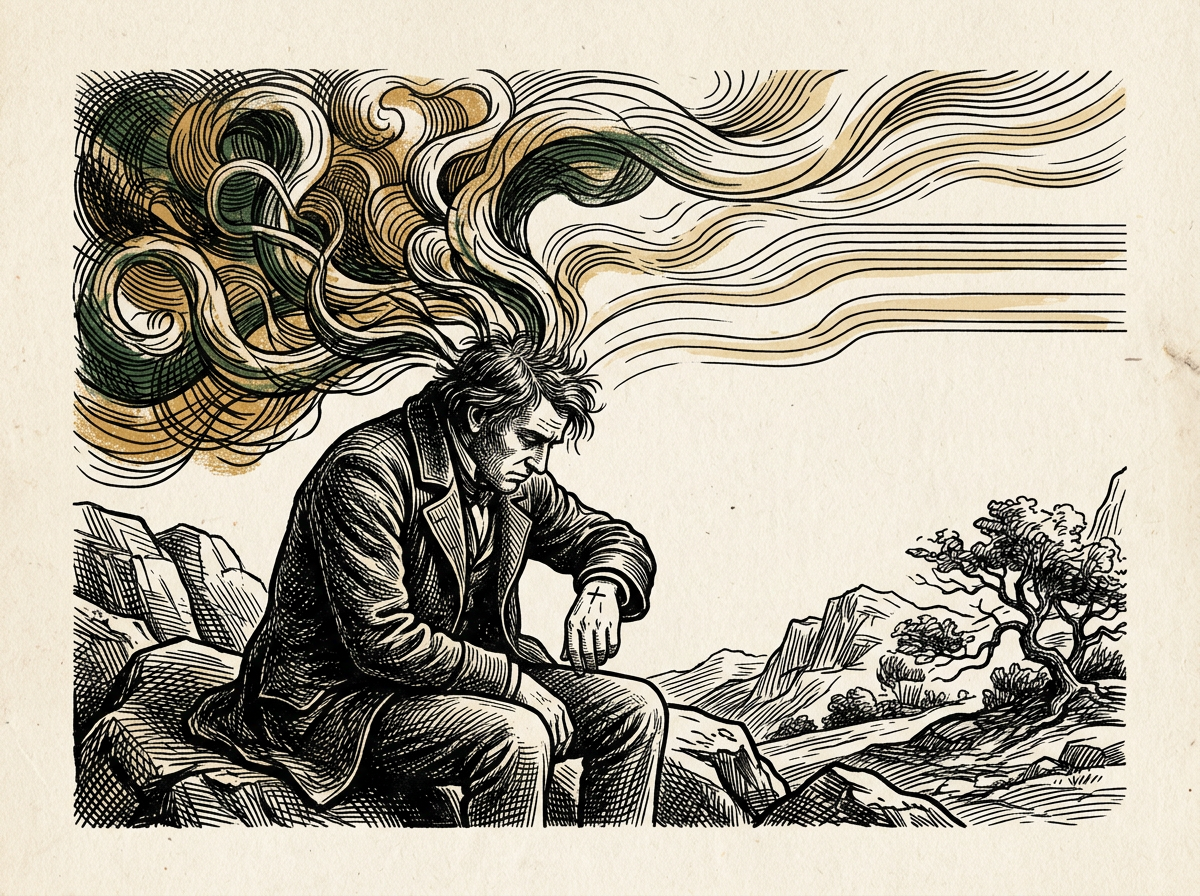
The core history of this trend is rooted in the broader cultural shift toward mental health transparency. People are no longer hiding their struggles with anxiety; instead, they are wearing them on their skin as badges of healing and mindfulness. The visual language of these tattoos usually contrasts chaos with calm. You might see a chaotic, scribble-like knot of lines suddenly straightening out into a clean, minimalist path, or a tiny symbol that represents a hard stop to a racing mind. It’s wearable psychology—a way to interrupt the neurological feedback loop of anxiety with a single glance down at your skin.
How To Take Action / What To Do
If you are considering translating your mental health journey into permanent ink, the process requires thoughtful planning. You want a design that doesn’t just look cool, but actually functions as a psychological anchor. Here is how to approach getting an overthinking tattoo.
STEP 01: Define Your Motif
Your first step is to choose a symbol that represents stillness, quietude, or release. Because the goal is to counteract a busy mind, the design itself often benefits from simplicity. Consider a minimalist anchor to keep you grounded, a simple solid dot representing the present moment, or a single unbroken line that signifies a clear, unburdened path. Some prefer abstract art, such as a tangled knot of lines that gradually unravels into neat parallelism, visually translating the shift from panic to peace. Pick something that speaks directly to your personal experience with mental clutter.
STEP 02: Placement Choice
An overthinking tattoo shouldn't just be hidden away on a shoulder blade; it needs to be functional. Select a spot on your body that you can easily see and touch throughout the day. The inner wrist, the side of your hand, or even a finger are prime locations. When a wave of anxiety hits and your mind starts racing into overdrive, you want to be able to glance down instantly or run your finger over the ink. This creates a tactile grounding mechanism—a physical touchpoint that pulls your awareness out of your head and back into your body.
STEP 03: Consult an Artist
Once you have your concept and placement, bring concrete ideas to a professional tattoo artist. Since overthinking tattoos often rely on sharp contrasts between chaos and clarity, look for an artist who specializes in fine-line, minimalist, or geometric work. Bring specific sketches or reference images showcasing "tangled versus straight" lines. A skilled artist will be able to take your abstract mental state and translate it into clean, intentional art that looks timeless rather than messy. Collaborate with them to ensure the scale fits your chosen placement perfectly.
Key Takeaways
- Purpose-Driven Art: — An overthinking tattoo is a symbolic reminder to pause, silence mental clutter, and anchor yourself in the present moment.
- Design Strategy: — Effective designs often use a contrast of chaos and calm—such as tangled lines straightening out, a single dot, or an anchor—to represent mental clarity.
- Functional Placement: — Placing the tattoo in a visible, easily touchable spot like the inner wrist provides a tactile grounding tool to combat anxiety attacks in real time.
Chaff & Wheat Analysis
The Chaff: The article implies that a permanent symbol on the skin can reliably interrupt anxiety loops or silence overthinking. Calling a tattoo “wearable psychology” blurs the distinction between a personally meaningful reminder and an established mental health intervention.
The Wheat: A chosen symbol may help cue a practiced response—such as noticing your surroundings or returning to one manageable task—but its usefulness depends on the practice, not the permanence of the ink. A temporary mark or another visible reminder can serve the same purpose; persistent or disruptive anxiety deserves support beyond body art.
Related dispatches
MODERN RESTRAINT: CURBED ENTITLEMENT · The Bend Index
Moderation is not puritanism: finding humility in an age of impulse
25 Nov 2026
TACTICAL OVERSIGHT: POWER DYNAMICS · The Bend Index
Setting boundaries requires the leverage to survive their enforcement
25 Nov 2026
FALSE METAPHOR: EFFORTLESS ATTRACTION · The Bend Index
True magnetism requires an external strike, not passive alignment
25 Nov 2026
LEISURE DRIFT: PRESCRIPTIVE CONSUMPTION · The Bend Index
When mindless entertainment is repackaged as an actionable life protocol
24 Nov 2026